

If you ask any car lover to name the most iconic Japanese sports cars, the Nissan Fairlady Z will always be near the top of the list as it’s considered one of the longest-running and most fun sports cars of all time. Whether you are a car enthusiast or someone looking to buy a Nissan Fairlady Z car, this guide will tell you everything you need to know about this legendary car.
Contents
Nissan Fairlady Z Car: Evolution through the Eras
The Fairlady Z is a series of sports cars manufactured by Nissan since 1969. It was initially marketed as the Datsun 240Z in other markets. Since then, Nissan has manufactured seven generations of Z-cars, with the most recent – simply known as the Nissan Z – in production since 2022. To help you understand more about the Fairlady, we will show it through all its generations:
First generation (1970 – 1978)
This era began with the Nissan Fairlady Z, first launched in 1969. In the US, the model was also known as the Datsun 240Z (S30). The Fairlady Z quickly won over customers and became one of Nissan’s best-selling models, with sales of 520,000 units from 1970 to 1978.
This S30-generation Z not only changed the definition of “sports car” from 2-seat (British) roadster to 2-seat enclosed coupe, but also changed the reputation of Japanese automakers around the world from manufacturers of curious cars to world-class automakers.
This car was designed to be an affordable sports car that looked like a million dollars. The Nissan Fairlady Z used a smooth Inline-Six engine. While Japan got a 2.0L version to save on taxes, the US received larger 2.4L and 2.8L versions to handle highway driving.
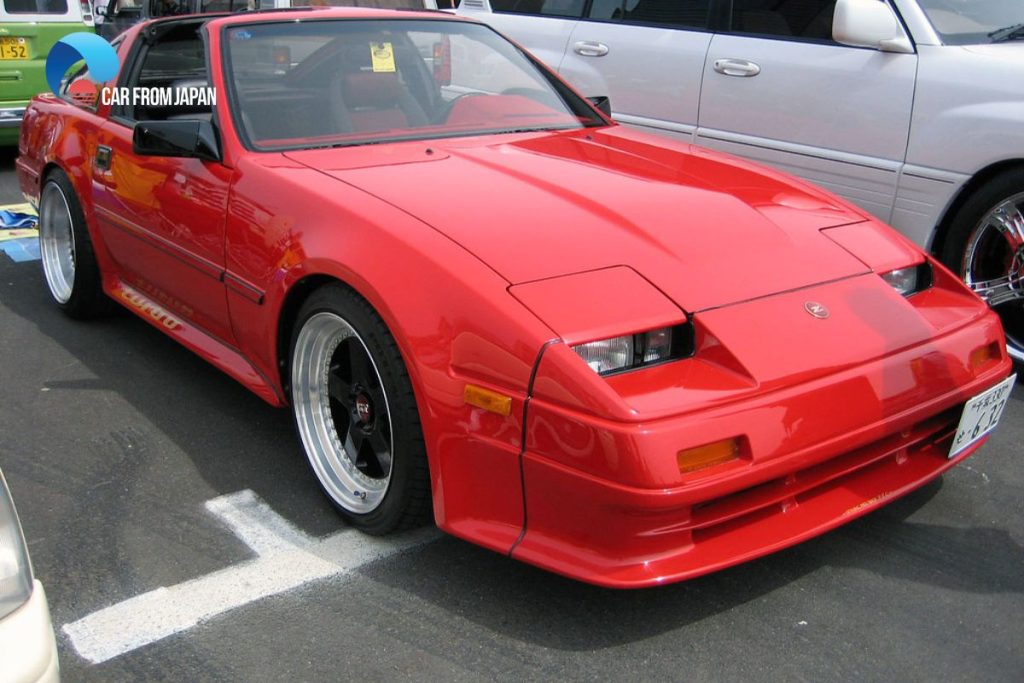
Second generation (1979-1983)
Continuing the success of the first generation, the Datsun 280ZX (S130) was introduced to the public in 1978. This generation moved toward luxury. It was heavier, softer, and more comfortable than the original. The 280ZX was the first Z-car to offer T-tops (removable roof panels) and a Turbocharger, which helped regain some of the speed lost to its heavier weight.
Third generation (1983-1989)
The Fairlady Z evolved into the third-generation Z31 in 1983. The 300ZX was introduced to the American market in 1983 and was produced through 1989. It was a massive sales success and became a symbol of 1980s high-tech luxury, featuring digital dashboards and “talking” warning systems.
Fourth generation (1989-2000)
The fourth-generation Fairlady Z (Z32), also known as the Nissan 300ZX, was released in 1989. The Nissan 300ZX (Z32) boasts a more refined design with both 2-seater and 2+2 versions. The Twin-Turbo in this version was a supercar killer, producing 300 horsepower. It was one of the first cars designed entirely using a supercomputer (CAD software).
Fifth Generation (2002–2009)
After a short break, Nissan brought the Z back to its roots. It was simpler, tougher, and more focused on the driver – The Nissan 350Z (Z33) was based on the 240Z Concept that debuted in 1999.
The 350Z comes in two variants: coupe and roadster. Its 3.5L naturally aspirated V6 engine produces 287 horsepower, and 306 horsepower in the high-performance 350Z NISMO version. It’s paired with either a 5-speed automatic or a 6-speed manual transmission. In approximately seven years, Nissan sold nearly 250,000 350Z models globally.
Sixth Generation: 2009–2021
The Nissan 370Z (Z34) is the successor to the 350Z, featuring a lightweight structure thanks to many components made from aluminum alloy. Similar to the 350Z, the Nissan 370Z comes in two versions: coupe and roadster.
Its 3.7L V6 engine produces 332 horsepower, and 350 horsepower in the NISMO version. It introduced SynchroRev Match, the world’s first manual transmission system that automatically “blips” the throttle for perfect downshifts.
Seventh generation: 2021–Present
The seventh-generation Nissan Z was first hinted at in 2018 and was officially revealed on August 17, 2021, in New York City. This is a “greatest hits” model. The design features a 240Z-style front and 300ZX-style taillights.
It uses a 3.0L Twin-Turbo V6 making 400 horsepower. For the first time, it doesn’t have a number in its name (like 400Z)—it is simply called the “Nissan Z.”
What Makes the “Z” Spirit Special?

The Fairlady Z has survived for over five decades because it stays true to a few core values:
- Accessibility: It remains a sports car that is within reach for many people. It offers performance similar to expensive supercars but with lower maintenance costs.
- Rear-wheel drive balance: Every Z-car has been rear-wheel drive. By pushing the engine back in the chassis, Nissan achieves a good weight balance. This makes the car predictable and fun to drive on twisty roads.
- A “Blank Canvas” for tuning: Much like the Toyota Chaser or Supra, the Fairlady Z is very popular in the modification community. Because the engines are built to last, owners often add better suspension, exhaust systems, or turbos to make the car even faster.
Common Questions for Buyers
If you are looking for a used Fairlady Z, here are a few things to keep in mind:
- Practicality: Most Z-cars are strict two-seaters. Some older generations offered a “2+2” model with small back seats, but they are mostly intended for two people and a small amount of luggage.
- Reliability: Engines like the 3.5L and 3.7L V6s are known for their durability and long service life when serviced regularly.
- Market availability: Sourcing a Fairlady Z directly from Japan is a popular option. These cars are often well-maintained and may have lower mileage than those found in other countries.
Conclusion: The Legacy of the Z
The Nissan Fairlady Z is more than just a fast car; it is a symbol of Japanese automotive history. From the early days of the 240Z to the high-tech 400-horsepower model of today, the Z has always focused on the driver. It offers a combination of style, power, and everyday usability that few other cars can match.
Whether you want a classic car from the 1970s or a modern daily driver, the Fairlady Z remains one of the best choices in the sports car world. It is a legend that continues to grow with every new generation.