


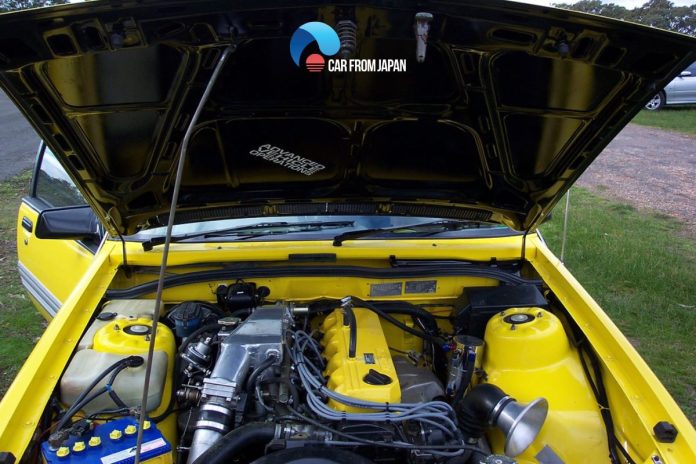
Everyone knows the Toyota Supra and its famous 2JZ engine, but real JDM fans know there’s another legend in the family: the Toyota Chaser. While the Supra gets Hollywood fame, the Chaser carries the ‘heart of a legend’—the 1JZ-GTE. This engine is the secret sauce that makes the Chaser so special. It’s a high-revving, turbocharged beast that proved you don’t need a two-door sports car to have world-class performance. In this topic, let’s dive into the Toyota Chaser engine!
Contents
Overview: What Engines are in the Toyota Chaser?
If you search for a used Toyota Chaser today, most people will show you a car drifting sideways with a screaming turbo. But the Chaser didn’t start that way. Over its six generations (from 1977 to 2001), it offered a massive variety of engines:

- The early generation (1977–1984): In the beginning (the X30 to X60 models), the Chaser was mostly about fuel efficiency and comfort. Most came with four-cylinder engines like the 1.8L 4-cylinder (3T-U) and the 2.0L (18R-U). They weren’t fast, but they were incredibly reliable daily drivers.
- The next generation: For people who wanted a smoother ride, Toyota offered Inline-Six engines (like the 1G-FE). Because all six cylinders are in a straight line, they don’t vibrate like a V6, making the car feel much more “expensive” and quiet on the highway.
- The turbo revolution (1990–2001): This is where the legend was born. Starting with the JZX81 and moving into the famous JZX90 and JZX100, Toyota began dropping its heavy-hitters into the Chaser. This included the 1JZ-GTE (2.5L Twin-Turbo) and even the non-turbo 2JZ-GE (3.0L) shared with the Supra.
What’s So Special About The Toyota Chaser Engine?
Why do people still pay thousands of dollars for a 25-year-old Toyota Chaser engine? It’s not just about the power numbers on paper; it’s about how they were built:
- Durable build: Most modern engines are made of aluminum to save weight, but JZ engines use a cast-iron block. Iron is much stronger and can handle high heat and pressure. Because it was built so tough, people can double or triple the engine’s power using original internal parts without them breaking.
- Smooth balance: This engine uses an “inline-six” layout, where all six cylinders are in a straight line. This design naturally cancels out vibrations as the pistons move. The result is a very smooth power delivery that makes the car feel quiet like a luxury vehicle, but stable enough for racing.
- The high-rev sound: The 1JZ-GTE engine has a shorter piston stroke than the larger 3.0L 2JZ engine. This allows it to reach high RPMs more quickly. When the engine revs high, it creates a high-pitched metallic sound that has become very famous in the drifting community.

Evolution: JZX90 vs. JZX100
The two most popular versions of the Chaser are the JZX90 (1992–1996) and the JZX100 (1996–2001). Both use the 2.5L 1JZ-GTE engine, but they work differently.
- JZX90 (Twin-Turbo): This model used two small turbochargers working at the same time. It had a raw feel and was officially rated at 280 hp.
- Toyota Chaser JZX100 (Single Turbo with VVT-i): In 1996, Toyota changed the engine. They used one larger turbocharger instead of two and added a system called VVT-i (Variable Valve Timing).
On paper, the power stayed at 280 hp, but the newer engine was actually better. It had more “push” (torque) at low speeds, which made the car feel faster when starting from a stop. It was also about 10% better on fuel.
The Choice: 1JZ or 2JZ?
Some people ask if the Chaser’s 1JZ engine is “worse” than the 2JZ found in the Toyota Supra. The truth is, they were made for different things.
The 3.0L 2JZ-GE was available in the Chaser, but it did not have a turbo. It was designed for a smooth, luxury driving experience. The 2.5L 1JZ-GTE was the sporty choice with a turbo. While the 2JZ can eventually make more total power because it is a larger engine, many drivers prefer the 1JZ for the Chaser. It feels lighter and is very fun to drive on winding roads or race tracks.
Conclusion: A Lasting Legacy
The engines in the Toyota Chaser proved that a family sedan could be a world-class performance car. Whether it was the early models built for daily driving or the later turbo models built for speed, Toyota’s engineering was top-tier. Even 20 years after the last one was built, these engines are still some of the most respected in the world.