


Choosing between an SUV and a sedan isn’t just about looks; it’s about how you live. Do you haul kids and camping gear on weekends, or do you mostly commute solo on city roads?
Are you stretching a budget or chasing the smoothest highway ride money can buy? Japanese automakers have long dominated both categories, offering some of the most reliable, well-priced, and practical vehicles on the market.
So if you’ve narrowed your shortlist to Japanese brands, smart move. The next question is, SUV or sedan? Let’s break it down properly!
Contents
The 4 Japanese SUVs Worth Your Attention
Toyota RAV4
The RAV4 is the best-selling SUV in the world for a reason. It’s not flashy; it’s not trying to be. It’s just relentlessly excellent at being a car.
The cabin is roomy enough for a family of five, the hybrid version gets genuinely impressive mileage, and Toyota’s reliability reputation means you’re unlikely to see the inside of a repair shop very often.
If you want one vehicle that does everything reasonably well without any glaring weaknesses, the RAV4 is probably it.
Honda CR-V
The CR-V has always been the sensible choice for buyers who do their homework.
Honda managed to stuff more cargo space into this SUV than almost any rival in its class: 39.2 cubic feet behind the rear seats, which is remarkable for a vehicle this size. The rear seat legroom is exceptional too, making it a genuine family hauler.
A turbocharged engine option gives it more punch than you’d expect, though the infotainment system has never quite kept up with the competition.
Mazda CX-5
If you’ve ever sat in a CX-5 and thought it felt pricier than its price tag suggests, you’re not mistaken.
Mazda deliberately positioned this SUV as a near-premium product, and it shows in the stitched leather, the quiet cabin, and the way it handles corners.
It’s the SUV for people who care about the driving experience and don’t want to feel like they’re piloting a bus. The trade-off is cargo space, the smallest of this group, but for most daily-use scenarios, that rarely matters.
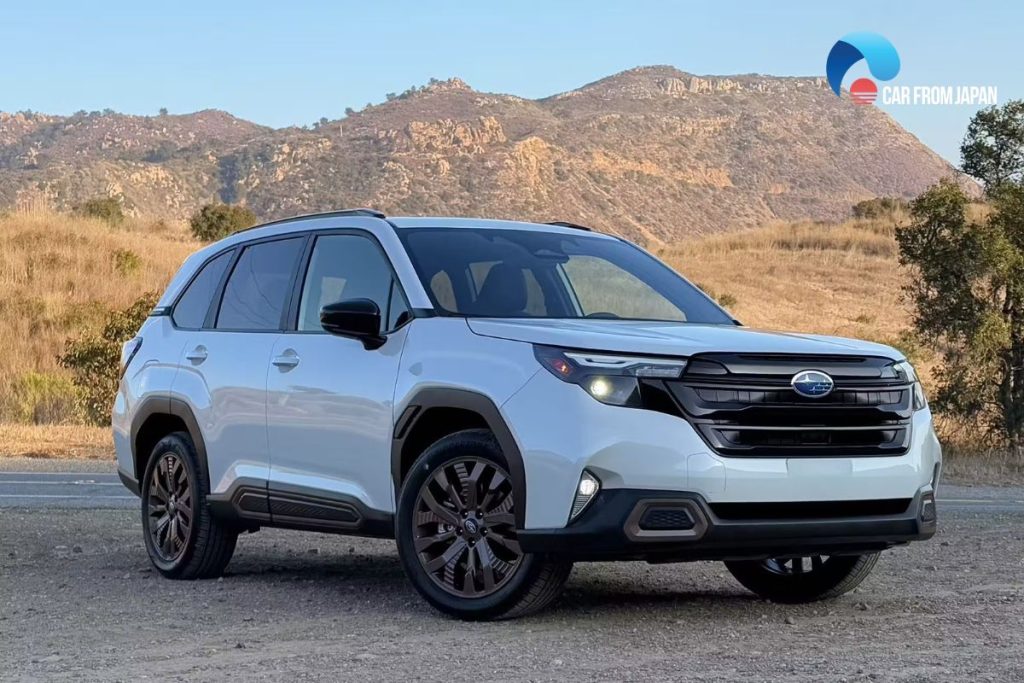
Subaru Forester
The Forester is the outlier in this group, and proudly so. Every single trim level comes with Subaru’s Symmetrical All-Wheel Drive as standard with no upgrades needed at no extra cost.
For anyone living in the mountains, snow country, or anywhere that sees serious weather, that’s a significant real-world advantage. It also has some of the best outward visibility of any SUV on sale, which makes parking and reversing far less stressful.
Where it falls short is under the bonnet; the engine is underwhelming, and its tech features lag a couple of years behind rivals.
SUV Specs at a Glance
| Model | Starting Price (USD) | Fuel Economy (City/Hwy MPG) | Ground Clearance | Cargo Space |
| Toyota RAV4 | ~$30,000 | 27 / 35 | 8.4 in | 37.6 cu ft |
| Honda CR-V | ~$31,000 | 28 / 34 | 7.8 in | 39.2 cu ft |
| Mazda CX-5 | ~$29,000 | 25 / 31 | 8.8 in | 30.9 cu ft |
| Subaru Forester | ~$28,000 | 26 / 33 | 8.7 in | 35.4 cu ft |
SUV Pros & Cons
| Model | Pros | Cons |
| Toyota RAV4 | Legendary reliability; strong resale value; spacious cabin; available hybrid | The interior feels a bit plain; some wind noise at highway speeds |
| Honda CR-V | Best-in-class cargo room; comfortable rear seats; turbocharged engine options | Infotainment can feel clunky, not as sporty to drive |
| Mazda CX-5 | Premium interior feel; sharp handling, and the quietest ride in the segment | Smallest cargo space in this group; no third-row option |
| Subaru Forester | Standard AWD on every trim; excellent visibility; great for outdoorsy types | Underpowered engine; lags behind rivals in tech features |
Bottom line on SUVs: For the most balanced daily driver, the RAV4 is simply tough to beat. If cargo space is the priority, go CR-V.
Want a near-luxury feel without the price tag? The CX-5 delivers. And if you live somewhere that sees real winter, the Forester’s standard AWD is a genuine, no-compromise advantage.
The 4 Japanese Sedans Worth Your Attention
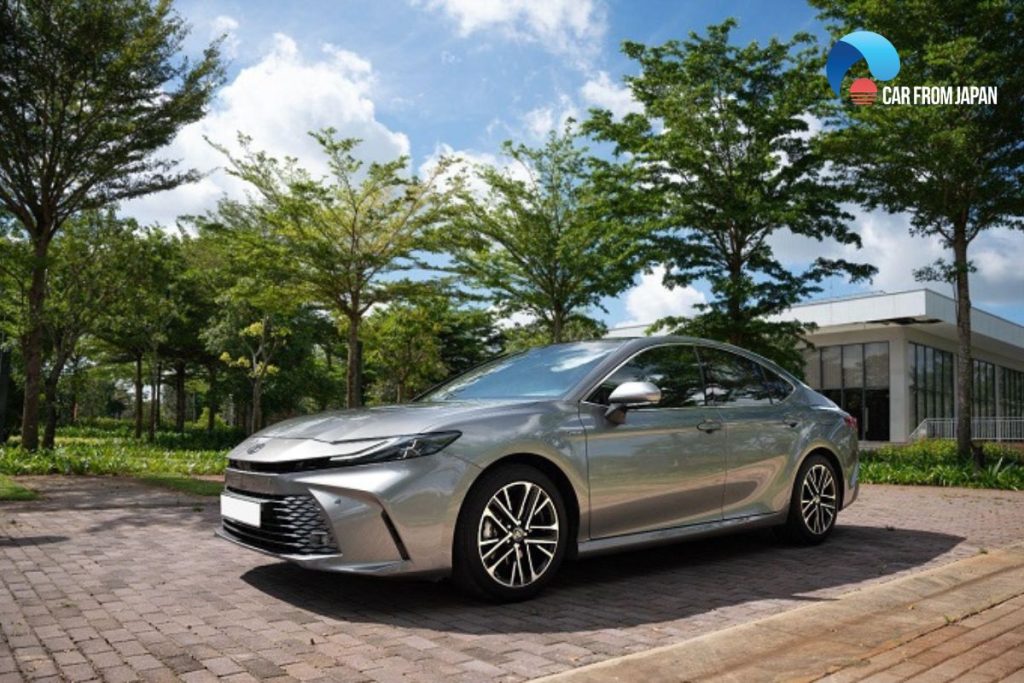
Toyota Camry
The Camry has been the definition of “dependable” for four decades, and the current generation has quietly become much more interesting to look at while keeping everything that made it famous intact.
It offers one of the smoothest highway rides in its class, returns excellent fuel economy, particularly in hybrid form, and holds its value better than almost any mid-size sedan on the market.
It’s not the car that makes your pulse race, but it is the car that’s still running perfectly at 200,000 miles.
Honda Accord
The Accord has always been the sportier, slightly more ambitious sibling to the Camry. Honda engineers genuinely try to make this car enjoyable to drive, and it shows the steering has weight and feedback the Camry simply can’t match.
The interior space is remarkable for a sedan; the rear seat could comfortably fit two adults on a long road trip without anyone complaining. Safety scores are consistently near the top of its segment.
The main gotcha is that the higher trims can push the price into SUV territory, so it pays to know which features you actually need.
Mazda 6
The Mazda 6 is what happens when a mainstream car company decides to punch well above its weight class. The interior, particularly in the top Signature trim, uses genuine wood, real leather, and a quieted cabin that rivals sedans costing significantly more.
The steering feels sharp and connected in a way that most sedans in this price range simply don’t.
It was discontinued in North America after 2023, which is genuinely a shame, but certified pre-owned examples are still widely available and well worth considering if you can track one down.
Subaru Legacy
The Legacy is less talked about than the others, partly because it doesn’t shout for attention. But here’s what it offers that no other sedan in this list can: standard all-wheel drive on every trim.
For buyers in snowy or rainy climates who want a sedan, not an SUV, the Legacy is essentially the only game in town.
It’s comfortable over long distances, well-equipped for the price, and built with Subaru’s characteristic ruggedness. The styling is functional rather than exciting, and the CVT gearbox isn’t going to win any enthusiasm awards, but it gets the job done reliably.
Sedan Specs at a Glance
| Model | Starting Price (USD) | Fuel Economy (City/Hwy MPG) | Trunk Space | Passenger Space |
| Toyota Camry | ~$27,000 | 28 / 39 | 15.1 cu ft | Excellent |
| Honda Accord | ~$28,500 | 29 / 37 | 16.7 cu ft | Best-in-class |
| Mazda 6 | ~$25,500 | 26 / 35 | 14.8 cu ft | Very Good |
| Subaru Legacy | ~$24,000 | 27 / 35 | 15.1 cu ft | Good |
Note: The Mazda 6 was discontinued in North America after 2023 but remains available in other markets. Certified pre-owned examples are still available through dealerships.
Sedan Pros & Cons
| Model | Pros | Cons |
| Toyota Camry | Superb long-term reliability, great fuel economy, smooth ride, hybrid available | Conservative styling; not particularly exciting to drive |
| Honda Accord | Massive interior space; engaging to drive; excellent safety scores | Higher trims get expensive quickly; ride can feel firm |
| Mazda 6 | Near-luxury interior; sporty and responsive; punches above its price | Discontinued in North America; dealer support is thinning |
| Subaru Legacy | Only AWD sedan in this group; solid value; comfortable on long drives | Bland styling; CVT transmission feels uninspiring |
Bottom line on sedans: The Camry is the king of reliability and resale. The Accord is for drivers who want more space, more engagement, and more tech. The Mazda 6 is a fantastic find if you can track one down.
And the Legacy is the quiet hero for anyone who wants the lower profile of a sedan without giving up all-weather capability.
Cost Comparison: Ownership, Running Costs & Insurance
This aspect surprises many buyers. The sticker price is just the beginning.
| Category | Japanese SUV (avg.) | Japanese Sedan (avg.) |
| Purchase Price | $28,000 – $32,000 | $24,000 – $29,000 |
| Annual Fuel Cost | ~$1,900 – $2,200 | ~$1,500 – $1,800 |
| Annual Maintenance | ~$500 – $700 | ~$400 – $600 |
| Average Annual Car Insurance | ~$1,600 – $2,000 | ~$1,300 – $1,700 |
| 5-Year Total Cost of Ownership | ~$42,000 – $50,000 | ~$35,000 – $43,000 |
SUVs cost more to insure, on average, because they’re heavier, more expensive to repair, and statistically involved in more serious collisions.
Sedans tend to attract lower premiums; they’re lighter, lower to the ground, and carry a risk profile that insurers typically reward with better rates.
That said, the gap isn’t enormous, and how you shop makes a real difference. Getting the right car insurance policy before you sign on a vehicle, not after, is one of the most underrated moves a new car buyer can make.
Premiums for the exact same car can vary by hundreds of dollars annually depending on the insurer, your zip code, your driving history, and the coverage level you choose.
Bundling your auto policy with home or renters insurance can knock another 10–15% off your premium.
If you’re genuinely torn between two models and the ownership costs look close, running the insurance numbers on both is a fast, free way to break the tie.
So, Which One Should You Choose?
There’s no universally correct answer, but there are pretty clear signals.
Choose an SUV if:
- You have kids or pets or regularly carry a lot of gear
- You live somewhere with rough winters or unpaved roads
- You want the higher seating position and sense of command on the road
- Resale value in 5–7 years matters to you (SUVs hold value well)
Choose a sedan if:
- You mostly drive solo or with one other person
- Fuel efficiency and lower running costs are a real priority
- You spend a lot of time on highways and value a smooth, quiet ride
- Parking in tight urban spots is part of your daily reality
The Japanese models across both categories are genuinely excellent; you’re not making a bad choice either way. Drive both, price out the insurance, and let the numbers (and your gut) make the final call.