


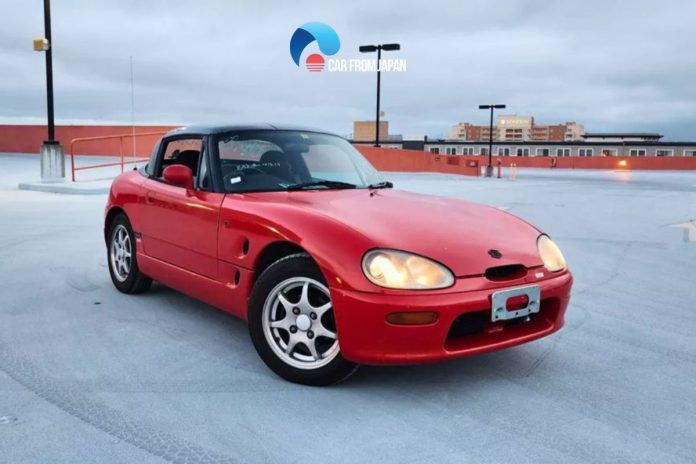
Thanks to its captivating and powerful appearance, the Suzuki Cappuccino, the Japanese Baby Viper, has always held a special place in the hearts of JDM enthusiasts.
Besides the traditional 5-speed manual transmission, many drivers in the JDM community often discuss the option of a Suzuki Cappuccino automatic!
The choice between the powerful manual shifting experience and the convenience of an automatic transmission has created an interesting question: Which is the optimal transmission for your Cappuccino?
Contents
The 5-Speed Manual Transmission (MT)
From its initial launch to over three decades later, the Suzuki Cappuccino 5-speed manual transmission remains a masterpiece for enthusiasts who crave the thrill of riding.
The bike offers a powerful and direct connection between your hands, clutch, and the 660cc turbocharged engine, a feeling difficult for any automatic system to replicate.
The purely mechanical experience of clutch engagement and gear changes on the 5-Speed Manual transmission is truly memorable and exhilarating.
When the tachometer reaches its peak, when the turbocharger is at its most explosive, the engine’s power truly shines.
With the manual transmission, you can actively maintain the bike at the optimal rev range to sustain traction and acceleration by mastering the timing of gear changes. The rider has complete control over the agility when overtaking or cornering sharply.
Furthermore, the decisive and precise gear changes of a classic JDM sports bike enhance the value of the short-throw shifter.
The Suzuki Cappuccino boasts an optimized pedal design, allowing riders to perform skillful techniques such as heel-and-toe downshifting.
We can see that the manual transmission version creates mechanical vibrations and responsive feedback from the drivetrain, helping maintain its position in the classic JDM genre.
The Suzuki Cappuccino Automatic (AT)
The Suzuki Cappuccino automatic transmission is quite rare in the Japanese JDM car market due to its limited production run, in contrast to the popularity of the manual version.
The automatic transmission usually appears in the later Cappuccino EA21R models, but it still attracts collectors of unique cars.
On a classic rear-wheel-drive car, this transmission configuration is a unique feature for the JDM market until now.
Drivers of the Cappuccino automatic transmission can enjoy a relaxed driving experience in crowded urban areas, instead of constantly engaging the clutch and shifting gears in traffic jams.
For that reason, this JDM sports car version is easily accessible to many customers who prefer a flexible and smooth driving experience, while still maintaining its inherent strength and personality.
Moreover, from a machine with a strong racing feel, the automatic Cappuccino transforms into a stylish mini Grand Tourer, aiming for exciting open-top driving experiences.
Suzuki Cappuccino Automatic vs. Manual: Which One is the Better JDM Classic?
Performance vs. Practicality
When considering performance, a 5-speed manual transmission has the advantage due to optimized gear ratios and flexible torque distribution.
Meanwhile, a Cappuccino automatic transmission with a 3 or 4-speed gearbox prioritizes stability, relaxation, and calmness due to longer gear ratios.
The way the turbocharged engine reacts when combined with the torque converter of an automatic transmission also clearly shows the difference between them.
Instead of the rough mechanical connection of a manual transmission, the torque converter helps to dampen vibrations, thereby smoothing the turbocharger’s response at high RPMs. This is useful for daily commuting in urban areas and helps prevent clutch fatigue for the driver.
Finally, there is the weight factor. Since automatic transmissions are generally heavier than manual transmissions, the car’s proud 50-50 weight distribution ratio may be affected.
You might not notice this difference under normal driving conditions, but to exploit the agility when cornering, the manual transmission version is more stable and precise.
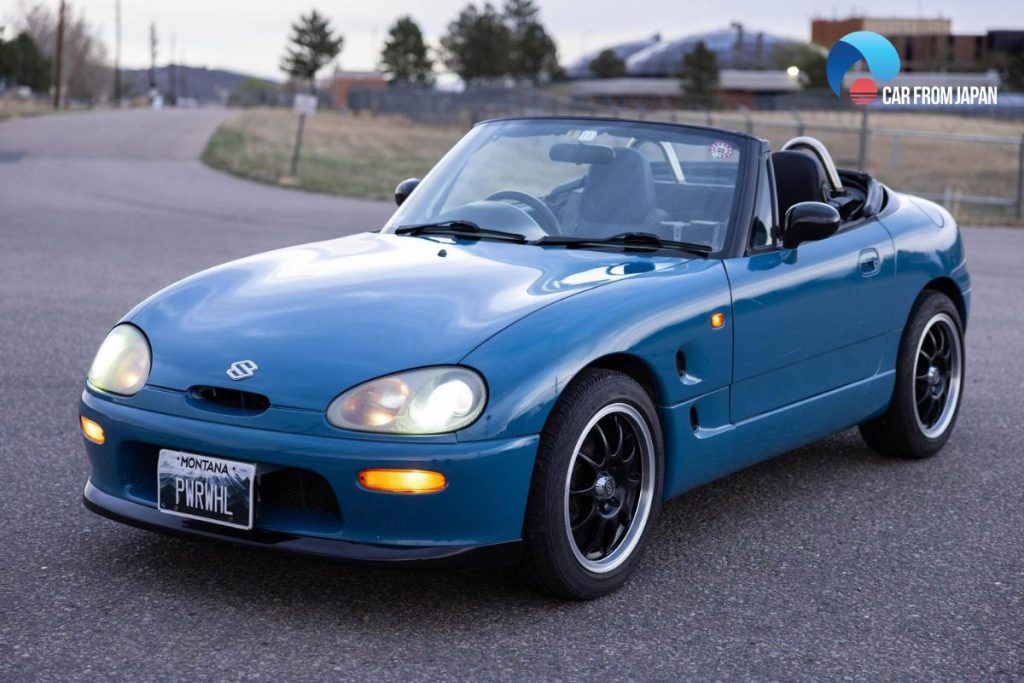
Collectibility and Market Value
In the pure JDM community, manual transmission cars often command high list prices at auctions and retain their value exceptionally well.
The Suzuki Cappuccino is no exception, with its manual version dominating in demand and resale value. Many consider it a sustainable investment in a piece of authentic Japanese sports car heritage.
The automatic version of the Cappuccino, however, has its own interesting target customers if they want to collect rare variants or prioritize a relaxed driving experience.
Regarding maintenance and repair, spare parts for the manual transmission are readily available from the aftermarket community due to its simpler structure.
Due to the complexity of the torque converters and control circuit boards of an automatic transmission over 30 years old, restoration and maintenance may be more difficult and require higher expertise.
Which One Should You Buy: Cappuccino Automatic or Manual
If the driver wants to master the turbocharged engine and experience the authentic driving feel of a rear-wheel-drive sports car, the 5-speed manual transmission is the irreplaceable choice.
With the manual transmission, the Suzuki Cappuccino is more than just a means of transportation; it becomes a machine with absolute mechanical connection, dedicated to JDM enthusiasts.
Conversely, with the automatic version eliminating clutch pressure and reducing the need to maintain engine RPM, you can enjoy leisurely, relaxed rides in this iconic car.
Note that automatic versions are associated with the EA21R generation with the modern K6A engine. This Cappuccino generation boasts a durable timing chain system and stable performance, which can somewhat alleviate the burden of rigorous maintenance.
Ultimately, whether you choose a powerful or smooth experience, each version carries a unique piece of JDM history and undeniable collectible value.
Conclusion
Whether equipped with a manual or automatic transmission, the Suzuki Cappuccino for sale remains a quintessential example of the golden age of Japanese automobiles in the early 1990s.
Choosing between MT or AT on this unique Kei sports car is a choice of how you want to enjoy the driving experience.
You might want to feel the turbocharged engine, opt for a manual transmission, while the Suzuki Cappuccino automatic will allow you to glide through city streets leisurely and smoothly.
Understand your needs to find the perfect piece for conquering the roads ahead with Car From Japan!