


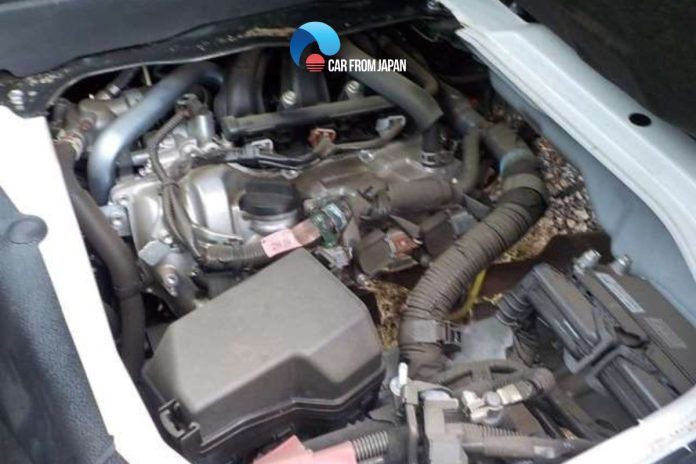
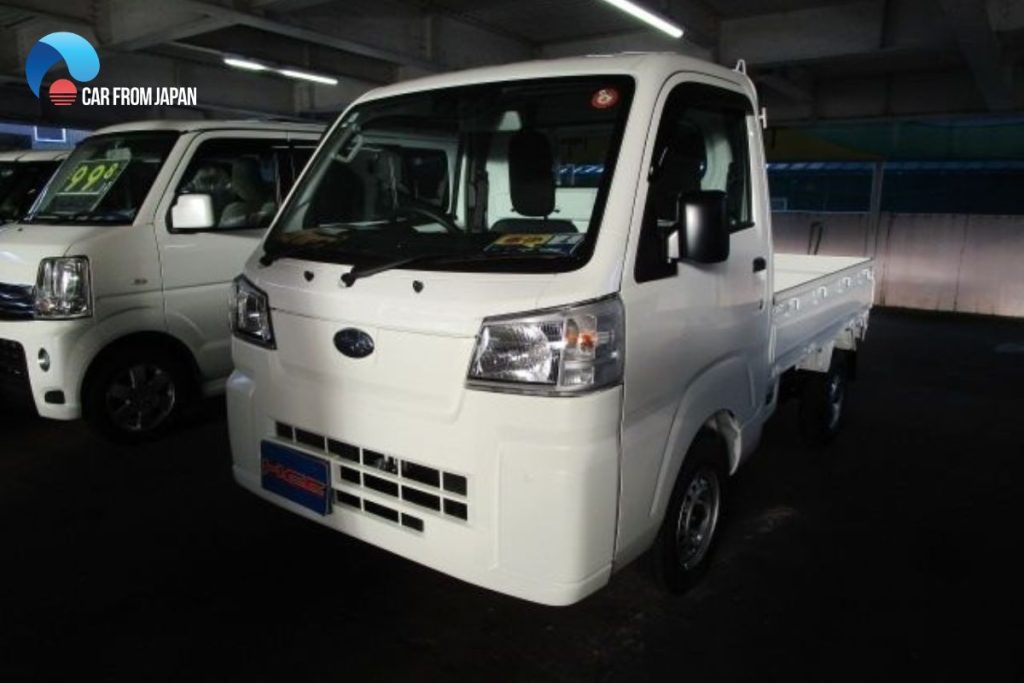
The Subaru Sambar is known for its compact size, but its engine plays a key role in how the vehicle works. Over the years, Subaru has developed different engine versions for this model, each designed to meet kei regulations while maintaining usability. Understanding the Subaru Sambar engine helps explain what the Sambar can and cannot do:
Contents
Overview of Subaru Sambar Engine Design
Before looking at how the engine has changed over time, it’s important to understand the basic design of the Subaru Sambar and what makes it different from other kei trucks.
Rear-engine layout (Unique feature)
One of the most distinctive features of the Subaru Sambar is its rear-engine layout, where the engine is mounted at the back of the vehicle instead of the front. This setup works together with a rear-wheel-drive system, which is quite unusual in the kei truck segment. Most small trucks in this category use a front-engine layout, so this design makes the Sambar stand out. There are a few practical reasons behind this:
- It helps create a more balanced weight distribution
- It allows for a more compact front cabin, giving better space for the driver and passenger
This layout is part of what gives the Subaru Sambar its unique character compared to other trucks of similar size.
Engine size and kei regulations
The engine in the Subaru Sambar is designed to follow Japan’s kei car regulations, which limit engine size and overall vehicle dimensions. Over time, the engine capacity has changed in line with these rules:
- Early models used 360cc engines, which later increased to 550cc
- In later generations, the size was standardized at 660cc, which remains the kei limit today
Because of these regulations, the engine is intentionally small. The goal is not high power, but to provide efficient and practical performance within strict limits.
Subaru Sambar Engine by Generation
The engine of the Subaru Sambar has changed over time mainly due to kei regulations and emissions requirements, but it has consistently followed a compact, rear-mounted design.
Early generations (1960s–1970s)
The first generations of the Subaru Sambar used air-cooled engines derived from the Subaru 360, with a 356cc two-cylinder configuration. In later updates during the 1970s:
- The engine transitioned to a water-cooled system
- A four-stroke engine (EK21) was introduced to improve emissions
- Engine size increased progressively:
- From 356cc → 490cc → 550cc
These early engines were simple and compact, but gradually improved to meet stricter regulations.
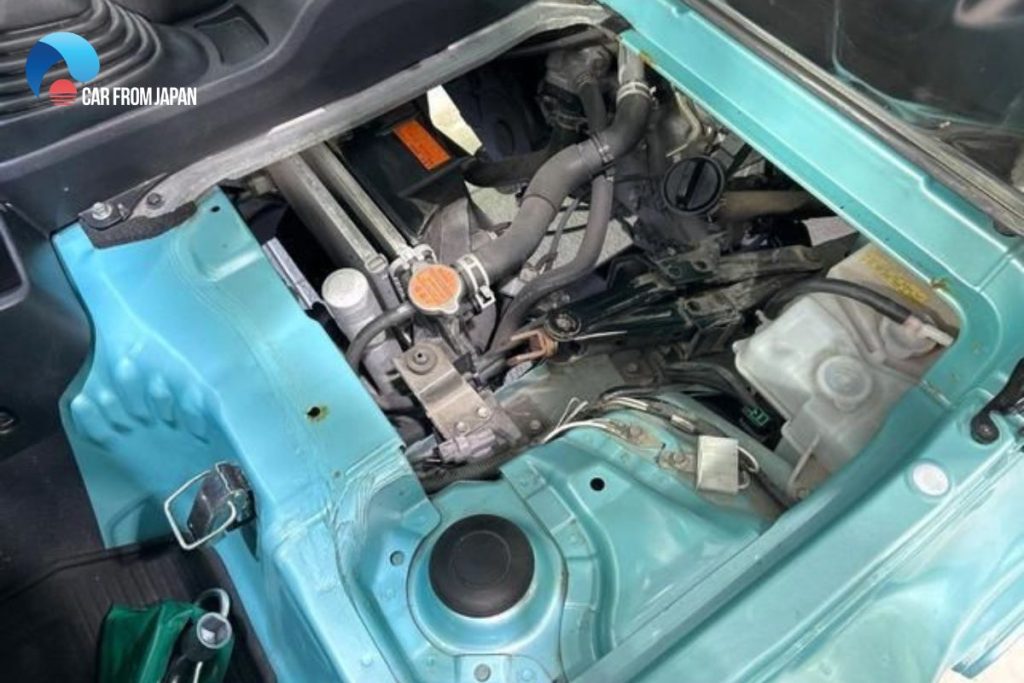
Mid generations (1980s–1990s)
As kei regulations changed again, engine displacement increased to 660cc, which became the new standard. During this period:
- Subaru continued using rear-mounted engines
- The Sambar began sharing engines with other Subaru kei models
- The design moved fully toward water-cooled, more modern engine systems
This stage marks the transition from basic early engines to more standardized and regulated designs.
Modern generations (1990s–2010s)
From the 1990s onward, the Subaru Sambar used the EN07 engine, a 660cc four-cylinder engine shared with models like the Subaru Vivio. Key characteristics include:
- Four-cylinder configuration
- Availability of supercharged versions
- Use of fuel injection in certain variants
This engine became the most widely used version, especially in models that are commonly imported today.
| Production | Subaru Sambar Engine |
| 1961-1966 | 356 cc EK31 two-stroke I2 |
| 1966-1973 | 356 cc EK31 two-stroke I2/ 356 cc EK33 two-stroke I2 |
| 1973-1982 | 356 cc EK34 two-stroke I2/ 358 cc EK21 I2/ 490 cc EK22 I2/ 544 cc EK23 I2 |
| 1982-1990 | 544 cc EK23 I2/ 544 cc EK23 6V I2/ 665 cc EK42 I2 |
| 1990- present | 658 cc EN07C/F/L/V I4/ 658 cc EN07Y supercharged I4 |
Engine Performance and Practical Use
Looking at specifications alone doesn’t give the full picture. The engine in the Subaru Sambar is designed to meet kei regulations, so its performance is built around efficiency and practicality rather than high output.
Power and output
Most Subaru Sambar models, especially those using the EN07 engine, produce around 38 to 55 horsepower, depending on the version and configuration. This level of output reflects the purpose of the engine:
- It is built for efficiency within strict kei limits
- It supports light-duty tasks such as small cargo transport
Rather than focusing on power, the engine is designed to provide enough performance for everyday use while keeping fuel consumption low.
Driving feel and practical use
In actual driving, the Subaru Sambar performs best in low-speed and short-distance conditions. It is suitable for:
- City driving
- Local deliveries or farm use
- Situations that don’t require high speed
However, there are clear limitations:
- Acceleration is modest, especially when carrying loads
- Top speed is limited, which makes highway driving less comfortable
Because of this, the engine works best when the truck is used as intended—light work over short distances, rather than long or high-speed trips.
Reliability and Maintenance
For many buyers, reliability is one of the main concerns when looking at the Subaru Sambar, especially since most units today are older vehicles.

Engine reliability
In general, the Subaru Sambar engine is considered reliable when it is properly maintained. Its design is relatively simple, particularly in older generations, making it easier to manage than more complex modern engines.
Because it was built to meet kei regulations and support light-duty use, the engine is not heavily stressed under normal conditions. This helps it maintain stable performance over time, as long as basic maintenance is not neglected.
Common maintenance needs
Like any aging vehicle, the Subaru Sambar requires regular maintenance to stay in good condition. Most of the attention should go to wear-and-tear components rather than major mechanical failures. Key areas to check include:
- Cooling system (radiator, hoses) to prevent overheating
- Engine oil and seals, which may degrade over time
- Belts and rubber components, which can crack or wear out with age
These are routine checks, but they become more important as the vehicle gets older.
Final Thoughts
The engine in the Subaru Sambar is not designed to impress with power, but to deliver efficient and reliable performance within kei limits. Its rear-engine layout and long development history make it quite different from typical small trucks.
While it has clear limitations in speed and output, it performs well for light-duty and short-distance use, which is exactly what it was built for. With proper maintenance, the engine can remain dependable over time. In the end, it works best when your expectations match its purpose.





