


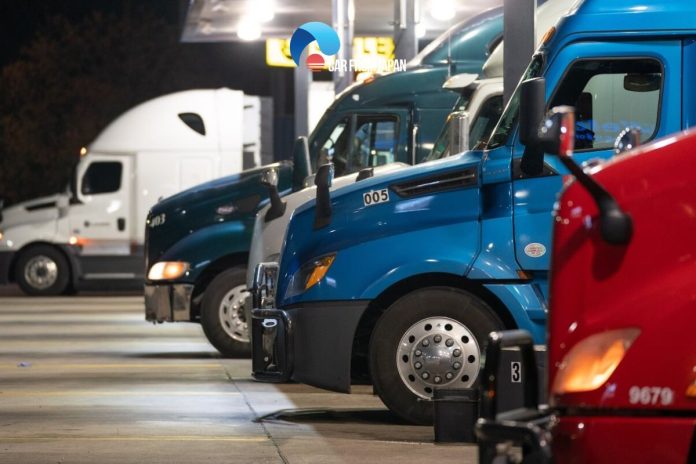
For any business that relies on moving freight. Mailrooms that get parcels every day or logistics teams that set up same-day courier services. The vehicles that move these goods are really important.
They are the difference between getting things delivered on time and having problems with deliveries over and over. Knowing about the vehicles themselves gives us a way to figure out if a freight company is good to work with.
A company like IGT Logistics chooses equipment based on what’s being shipped how far it has to go and how quickly it needs to get there.
The type of truck trailer used like a van or a Conestoga trailer or the type of truck like a standard one or a special same-day truck makes a big difference in whether a shipment arrives safely on time and, without going over budget.
S&P Global Mobility’s 2026 commercial vehicle outlook draws a line following a widespread downturn in 2024 driven by a shift from supply – to demand-led production, heavy and medium truck output began climbing gradually in 2025, with regional realignment rather than synchronized global demand shaping the recovery.
The machines powering commercial freight are not just mechanical assets – they are economic indicators, and right now, every tractor and trailer spec decision a carrier makes carries outsized strategic weight.
For businesses in the United States that deal with shipping to different places the equipment they use can be both good and bad.
If shipping companies have the trucks and trailers for specific routes they will be able to deliver things on time. If they have the wrong equipment it will cause problems, delays and damage to the things they are shipping.
Contents
Tractors: The Foundation of Reliable Transit
Trucks are the important part of making sure things get to where they need to go on time.
The big trucks that are used to move things across the country in the United States have changed a lot in the ten years. The American Transportation Research Institute says that these trucks are now 25 percent better on gas than they were in 2000.
This means that shipping companies will have to pay less for gas, which helps keep the cost of shipping the same.
There are a things about new trucks that are important to companies that ship things:
*They have systems that help prevent accidents, which reduces the number of times things are late.
The Federal Motor Carrier Safety Administration says that trucks, with emergency brakes have 44 percent fewer accidents where one truck runs into the back of another. If there are accidents then things will get to where they need to go on time.
* They have systems that track where the trucks are and how they are doing in time. This means that the people waiting for a package will know when it will get there.
* They have places for the drivers to sleep which helps the shipping companies keep their drivers. If the shipping companies can keep their drivers then they will be able to deliver things on time often.

Trailer Types and Their Specific Applications
Trailer selection determines what a carrier can and cannot transport. The following table outlines the primary trailer types relevant to U.S. business shipping.
| Trailer Type | Length | Cargo Compatibility | Loading Method | Typical Business Use Case |
| Dry Van | 48-53 ft | Palletized goods, boxes, non-perishable freight | Rear dock | Standard LTL and FTL shipments |
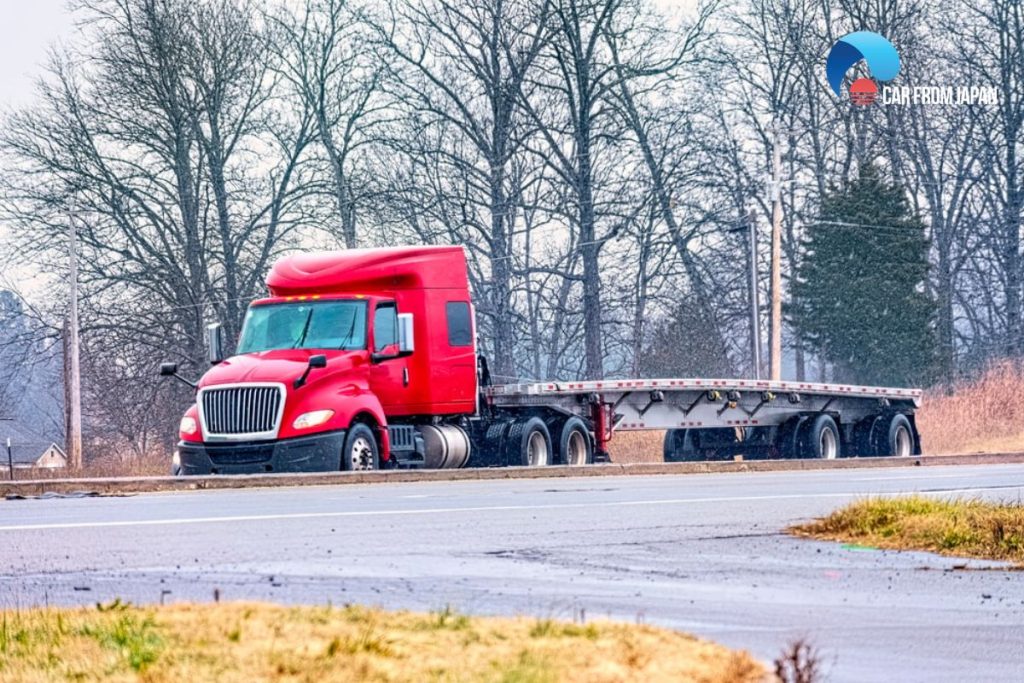
| Flatbed | 48-53 ft | Construction materials, machinery, irregular shapes | Top, sides, rear | Industrial equipment, building supplies |
| Step Deck | 48-53 ft | Tall freight up to 10’2″ | Top, sides, rear | Oversized components, agricultural machinery |
| Reefer | 48-53 ft | Temperature-sensitive goods (32-80°F range) | Rear dock | Pharmaceuticals, fresh food, produce |
| Conestoga | 48-53 ft | Sensitive oversized freight needing weather protection | Top, sides, rear | High-value machinery, sensitive raw materials |
Dry Van – The Workhorse of Business Shipping
These enclosed trailers protect goods from weather, road debris and theft. For less than truckload (LTL) and full truckload (FTL) shipments involving palletized or boxed goods the dry van is the go-to choice.
* They are used a lot for shipping goods that need to be kept safe and dry.
* Dry vans are like the default option for shipments.
Flatbed and Step Deck – For Unusual Shipments
When freight is too big or too tall for a standard trailer, flatbed and step deck trailers are used.
* Step decks can lower their deck height by 12 to 18 inches.
* This allows for the transport of freight up to 10 feet 2 inches
* Construction materials, industrial machinery and large retail displays often need this equipment.
Reefer – Temperature-Controlled Shipping
Refrigerated trailers keep goods at a temperature usually between 32 and 80 degrees Fahrenheit.
* This is crucial for businesses shipping temperature- goods like pharmaceuticals, fresh produce or certain materials.
* A reefer breakdown can be costly with cargo valued at $50,000 or more being destroyed in hours.
Conestoga – The Hybrid Trailer
Conestoga trailers combine the flexibility of flatbed loading with the protection of a sliding tarp.
* A rail system lets the tarp slide backward.
* This allows for crane loading from above while keeping goods dry.
* Conestogas are ideal for freight that needs protection from weather.
Day and Fast Shipping Equipment
For same-day courier services or fast delivery the type of tractor and trailer used is different.
* Same-day fleets often use trucks with small cargo boxes.
* These are good for city deliveries.
* Cargo vans are used for parcel and document delivery.
* Sprinter vans are used for freight that needs temperature control or secure transport.
Mailroom and Parcel Management Considerations
For mailrooms receiving shipments understanding the equipment used is important.
* Dock height is crucial – standard dry vans need a dock height of 48 to 52 inches.
* Facilities without loading docks need to arrange for lift-gate service.
* Delivery times are more predictable with tractors that have telematics.
* This helps mailroom staff schedule resources efficiently.
Key Takeaways
The trucks and trailers used for shipping are not the same. Each type of equipment has a job. Companies that use the equipment for each shipment get better results in terms of transit time cargo condition and on-time delivery.
For businesses, in the U.S. that handle logistics, shipping, package management, same-day delivery services or mailroom operations knowing about these machines helps in choosing a freight partner.
The equipment a carrier uses impacts how well they perform. Asking about the types of trailers, truck technology and fleet makeup is a way to evaluate a vendor.