


The international used-car market has been on the rise, with a projected increase of USD 2.7 trillion by 2030 and over 70 million used cars traded annually. With high demand and expanding cross-border resale, conversion becomes more complicated. In this article, we explore the top challenges that car vendors face today and how AI overcomes them with precision, especially for scaling automotive dealerships.
Contents
Top 6 Challenges in Selling Used Cars Faced by Most Car Dealers
For most automotive dealers, managing one or more of the following challenges seems a constant struggle, especially due to manual pipelines. Let’s deep dive to see how:
1. Non-Standardized Vehicle Images
Buyers don’t just judge car visuals by lighting and angles; they also gain/lose trust based on these listings. While dealerships rely on manual edits, studio & photographer charges can slow pipelines and eat up a lot of budget.
2. Inventory Management and Turnover
Dealers juggle thousands of listings, each with unique inspection reports and pricing updates. Without automation, tracking aging stock, re-pricing unsold units, or identifying high-demand models becomes guesswork.
3. The Pricing Volatility in the Markets
The global resale prices vary depending on the region, the year of manufacture, fuel efficiency, and even the color choices. A car that is trendy in Japan will fail to sell in the UK. Vendors are exposed to low margins (below 5-7%) and are unable to charge dynamic and competitive prices on various platforms and among nations.
4. Lack of Confidence in Digital Dealings.
Customers require full documentation and inspection reports, the correct mileage, history of accidents, and verified images. Even the slightest discrepancy between a picture and the reality of the vehicle wipes out credibility in a second. In the case of exporters, a single mistake in the presentation or documentation can lead to the claim of refunds or loss of buyers.
5. Customer Engagement and Lead Response.
Buyers who are digital demand immediate responses. Slow response or lack of response to queries is a direct loss of sales to dealerships. The majority of sales departments continue to make follow-ups manually, which leads to a slow response rate and poor lead-to-appointment rates.
6. Documents & Regulatory Complexities.
In different markets, there are varying import/export regulations, emission regulations, and inspection requirements. The process of managing compliant paperwork and certifications is time-consuming, particularly in the case of operations in multiple regions.
How AI is Boosting Used Car Dealers with their Sales and Conversions
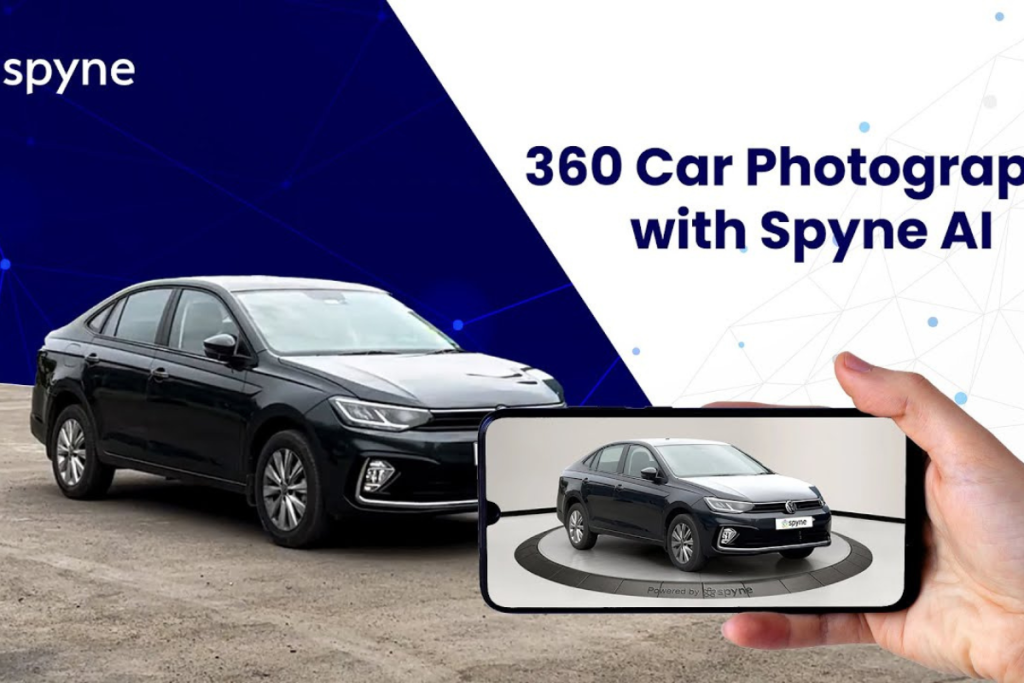
The current AI systems are changing how used car dealings are marketed, priced, and sold. Platforms like Spyne AI that offer AI tools like Studio AI & Conversational AI to enable dealerships to work faster, leaner, and scale smarter.
1. AI Imaging Enhancement
AI platforms transform raw automotive images into dealership-ready images in seconds – no photographers, no photo editing. It automatically recognizes the vehicle, swaps the background, and adjusts the light, as well as removes any reflection or distractions. All the images are standardized, which means that there are brand-similar images in all marketplaces. Listing cars now takes a shorter time, there is a higher number of clicks, and instant buyer trust is developed.
2. Data and Listing Accuracy (Automated)
AI interprets data, inspection reports, and condition sheets to pre-populate listing information. Identifies discrepancies in metadata (e.g., incorrect color or trim) before live listing. Establishes trust among international customers who rely on quality information that is free of error.
3. Dynamical Pricing and Market Intelligence
AI tracks thousands of listings across the marketplace, local price trends, and demand curves on a real-time basis. Helps vendors set prices of cars on par with the market and react immediately to changes in the market. With the integration of sales analytics and predictive analytics, dealerships are also able to sustain stable margins even in unstable markets.
4. Conversational Intelligence of Lead Handling
Tools like Vini AI – a conversational AI, 24/7 AI lead-assistant built for car dealerships, help them to solve their main hassle, i.e., cold calling or answering back-to-back incoming calls.
- Inbound Calling: Dealerships can hire AI employees to answer their potential buyers’ calls. It will not only save their budget for hiring receptionists. But it will also create a scope, where their talented salespeople can focus on more important tasks.
- Outbound calling: Losing leads on weekends and after hours is the main struggle for used car dealers. As per the recent reports, car dealers almost lose 25% of their potential customers because interested buyers contact the dealership after hours or on weekends. Therefore, these bots are trained enough to talk to your potential customers and resolve their queries, whether it’s scheduling a test drive, quoting vehicle prices, or availability.
5. Anticipatory Inventory Control
AI monitors the models that sell quicker in terms of geography, type of fuel, and season. It flags slow-moving, prior stock to the dealers to enable the adjustment of pricing or listing placement. Enables smarter procurement and inventory turnover – less dead stock and capital freed up to high-demand models.
6. Automated Inspections and Detection of Damages
AI vision systems detect scratches, dents, or body panel problems based on photos and then produce standardized reports on inspections in seconds. Supply chain visibility hastens resale qualification.
Conclusion
The used-car industry all over the world works on speed, accuracy, and trust, and now AI drives all these.
The transition is evident: between image perfection and instant communication, and an even increase in overall revenue of 10-30%. The resale economy will be dominated by dealers who digitize at a faster rate.
Solutions such as Spyne are transforming the way used cars are taken to market – with every vehicle being perfectly displayed, correctly registered, and immediately found by buyers on the other side of the world. AI isn’t the future; it’s already here.