


Your car needs regular tire maintenance, and sometimes you have to replace the old tires with new ones. Or, that vintage car from your prized collection may require a tire replacement! In both cases, you’ll need a reliable tire size conversion chart to compare tire sizes and find the correct measurement.
However, if you are a newbie in the automobile world, reading a tire size conversion chart could be quite confusing. Let’s check the brief guide to understanding a tire size comparison chart:
Contents
What Is a Tire Size Conversion Chart?
A tire size conversion chart helps you figure out the correct measurement of a tire or the right replacement for your vintage car’s original tires. However, no tire size conversion chart will give you the perfect measurements, as the correct size depends on a couple of factors, such as wheel size and diameter.
The safe bet is to compare outside diameters and the tread footprint to figure out how close a match they are. Your local tire dealer is supposed to have all the necessary information. So, ask for his advice before making the purchase.

| Metric tire size | Width | Aspect ratio | Rim diameter | Speed rating |
| 15-inch | 27×8.5 | 75 | 15 | S |
| 215/75R15 | 27×8.5 | 75 | 100 | ST |
| 225/70R15 | 28×9,5 | 70 | 15 | T |
| 16-inch | 27×8.5 | 65 | 16 | H |
| 205/65R16 | 27×8.5 | 65 | 16 | 9H |
| 215/70/R16 | 28×8.5 | 70 | 100 | TT |
| 17-inch | 29×9.0 | 30 | 17 | R |
| 225/65R17 | 30×9.5 | 65 | 102 | T |
| 235/70R17 | 30×9.5 | 75 | 75 | S |
| 18-inch | 30×9.5 | 30 | 18 | V |
| 235/60/R18 | 30×9.5 | 60 | 107 | V |
| 265/70R18 | 33×10.5 | 18 | 16 | T |
| 20-inch | 32×9.5 | 32 | 20 | H |
| 245/60R20 | 32×9.5 | 60 | 107 | H |
| 275/55R20 | 33×11 | 55 | 115 | S |
Convert tire size
Understanding Tire Sizes
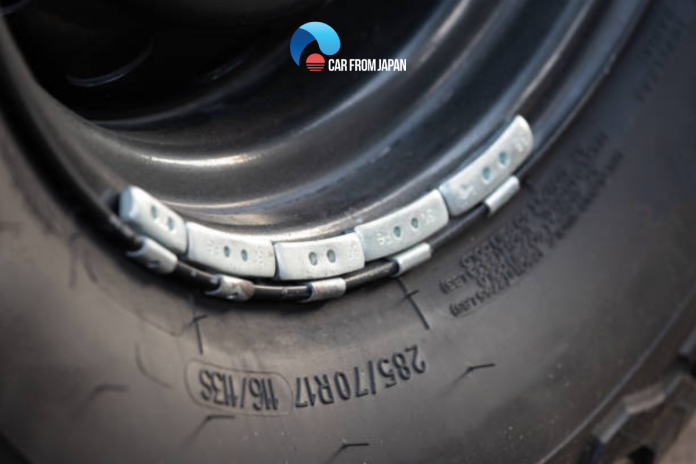
The first step of purchasing tires is to check your car’s manual to confirm the size. Now, check the sidewall of a front tire to find a number sequence such as 185/60R-14, 225/50R-16. Suppose the sequence reads 225/50R-16. Here, ‘225’ describes the width of the tire in millimeters, which means that the width is roughly 8.9 inches.
Now, the part ‘50R’ carries two types of information. The numeric part ‘50’ means that the sidewall height (or aspect ratio) is 50% of the tire’s width. So, the height of the tire, in this case, is nearly 4.45 inches. The letter ‘R’ indicates that the tire’s speed rating is less than 150mph. Tires rated to run at speeds of more than 150mph will carry the letter ‘ZR’.
Lastly, ‘16’ indicates the compatible wheel size. It means that this tire is compatible with a wheel that has a 16-inch diameter.
You can follow the similar process to find out the correct size of the rear tires if it’s different from the front tires.
How Important Are Correct Tire Measurements?
Every single dimension, such as width, speed rating, height, and wheel diameter, should be similar to ensure safety and driving performance. For example, a mismatched tire diameter will affect speedometer accuracy.
If the width and height are larger than the original requirement, your car’s body or chassis will frequently bump into the road surface. Besides, an incorrect size can affect the wheel speed sensors, leading to trouble with the anti-lock braking system (ABS).
So, before scanning the tire size conversion chart and placing an order, you should take your time to find out if the size of the tires you are going to purchase matches the recommended tire size of your car’s manufacturer.

Final Thoughts
Mastering the tire size code is crucial for safe driving. Those numbers on the sidewall control everything from safety to speedometer accuracy. Always use your conversion chart to ensure the replacement tire exactly matches the manufacturer’s load capacity and overall diameter. Don’t guess—your safety and your car’s handling depend on the correct size.






this educative ,keep on enlightening us
Thank you. We will provide more useful information like this. Stay tuned
Powerful have learnt something about tires
Great stuff, can these be sent to my email?
Thank u for interested in CarFromJapan. We currently don’t have mail magazine but we will. U can leave us your email. We will contact with u and send some useful information like that
Thank you for the knowledge you have passed to us.
We are happy to receive your comments. Please share with your friends so they can enjoy this article, too.
thanks, it is helpful to me,,,
We are happy to receive your comments. Please share with your friends so they can enjoy this article, too.
Does the R represent that the tire is radial or that the tire is capable of only doing a maximum speed of 150mph. In your article you said it represents the max speed but the diagram says otherwise
Be sending such articles to my email, given here below, for reference.
Hi, Nice article, but could you please help me. I am in Japan and bought a Kei truck. The tire size is the extremely common 145 R12. There is no stated aspect ratio. This is a super common tire and I can’t seem to find any info about them (at least not in english). What is the diameter of the tire?
I’d also be interested to know about the rims, how wide they are? what is the bolt pattern, I think 4×100.
I would like to go up to 145/80 R13. I am wondering about offsets etc.
Arigato!!!!!
Mike