


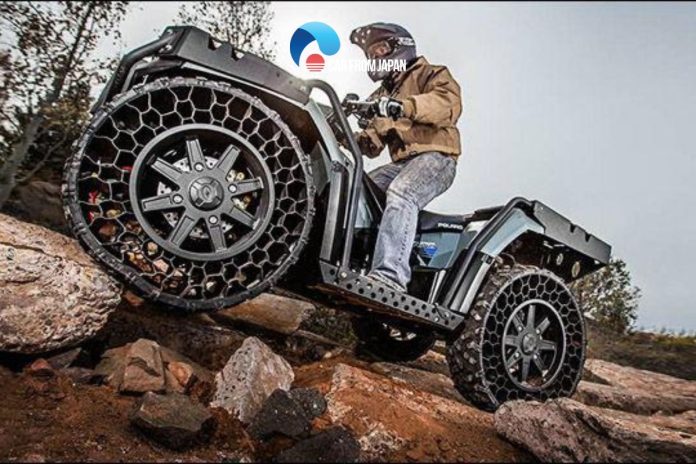
Security is a significant concern for many these days, especially diplomats and ambassadors of other countries.
With a continuous threat to safety, the vehicles of these high-value individuals come fixed with armor plating, bulletproof glasses, and a sturdy vehicle body. One of the prime focus remains on how to give the vehicle bulletproof tires for complete protection.
Contents
- What Are Bulletproof Tires?
- What Are Bulletproof Tires Made Of?
- How Many Types of Bulletproof Tire Systems Are Available?
- FAQs on Bulletproof Tires
- Are bulletproof tires actually bulletproof?
- Why don’t manufacturers simply make tires out of armor-grade steel?
- Can a bulletproof tire survive multiple gunshots?
- Why do bulletproof tires generate more heat than regular tires?
- Can bullet-resistant tires be manufactured using 3D printing?
- What role does Kevlar play in bulletproof tire construction?
- Why are bullet-resistant tires often paired with armored vehicles?
- Why do some bullet proof tires feel harsher on the road?
- How long can a bulletproof tire keep driving after losing all air pressure?
- How much extra weight does a bullet-resistant tire add to a vehicle?
- Summing Up
What Are Bulletproof Tires?
There is nothing like bulletproof glass but only bullet-resistant glass. However, one needs to remember that a shot, which is moving fast, can penetrate anything.
The primary goal of manufacturers while making a bulletproof tire is to make one, which can stop a bullet.
At the same time, the bulletproof tires should remain effective when hit by a larger round. A big bullet can pass through anything.
Unlike conventional tires, which deflate rapidly when punctured, these tires are built with reinforced sidewalls and other materials that allow them to continue supporting the weight of the vehicle for a limited distance and at reduced speeds.
Bullet proof car tires are primarily designed to provide a temporary solution in emergencies, allowing the driver to continue driving for a limited distance to reach a safe location or repair facility.
The exact distance and speed at which a vehicle can be driven on a punctured bulletproof tire depend on various factors, including the tire design, vehicle weight, and road conditions.
The manufacturing depends entirely on what purpose the tire is for and what type of artillery it is supposed to deflect.
See More: Tires are Made From Rubber For Certain Reasons
What Are Bulletproof Tires Made Of?
Here are some common materials used in the construction of bulletproof tires:
Reinforced rubber
The main component of bullet resistant tires is rubber, which provides elasticity and grip.
However, the rubber used in these tires is often reinforced with additional layers or compounds to increase strength and resistance to punctures.
Steel belts
Bulletproof tires typically feature steel belts embedded within the tread area. These belts provide added strength and help prevent punctures by distributing the force of impact and resisting penetration.
Kevlar or Aramid fibers
Kevlar, a high-strength synthetic fiber, is sometimes used in bulletproof tires. Kevlar fibers are lightweight and have excellent tensile strength, making them effective at resisting punctures and maintaining tire integrity even when damaged.
Aramid fibers, similar to Kevlar, are also used for reinforcement.
How Many Types of Bulletproof Tire Systems Are Available?
Now we will show you the different systems that will help you to understand What are Bulletproof Tires Made of and how they handle being shot.
A thick and durable rubber is capable of deflecting small rounds until they hit the tire at a steep angle.
However, large size and caliber bullets would be able to penetrate the vehicle tire, but we have four different options for handling the situation.
The self-healing tires
Self-healing Tires are designed to contain a material that will seal the hole made by the bullet. These come with a thick layer, which flows into and seals the holes formed by spikes as well.
Other systems for manufacturing bulletproof tires
Systems, which help pump air into the tire to keep it inflated and help the driver reach the destination.
Some of these rely on the onboard air compressors as those found in the tractor or trailers. These utilize the hub to pump air into the tire, and then in hoses that lead to the tires.
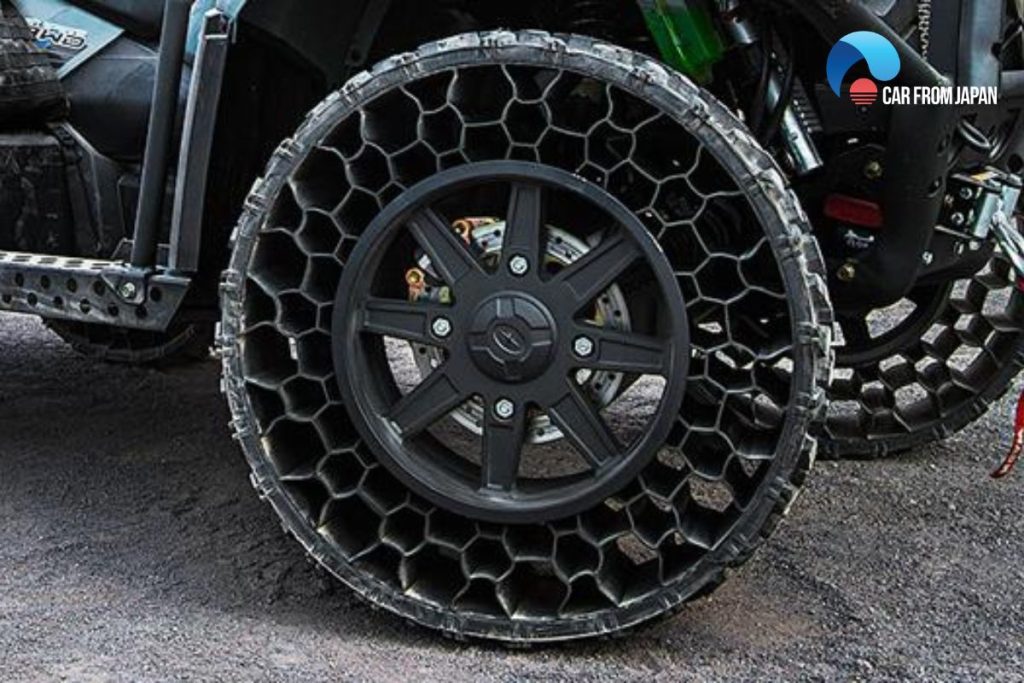
There are specific systems, which allow the tire to function without air. These utilize the air pumps to maintain the air pressure in the tires.
For example, in the Goodyear’s tire system, the bladders in the tires are equipped with check valves. These valves allow them to draw air in and pump the tire when the pressure is low.
Lastly, one of the ways to manufacture a bulletproof tire is to insert a solid ring around the tire rim to bear the weight in case there is less air pressure.
FAQs on Bulletproof Tires
Are bulletproof tires actually bulletproof?
Not completely. Most so-called “bulletproof tires” are designed to remain functional after being shot, rather than stop bullets entirely.
The tire may lose air, but the vehicle can continue driving thanks to reinforced internal structures.
Why don’t manufacturers simply make tires out of armor-grade steel?
Steel would make tires extremely heavy, reducing fuel efficiency, handling, braking performance, and ride comfort. Modern composites offer a better balance of strength and weight.
Can a bulletproof tire survive multiple gunshots?
It depends on the design and caliber of the ammunition. Some military-grade run-flat systems can withstand multiple hits and still travel dozens of miles, while civilian systems have lower thresholds.
Why do bulletproof tires generate more heat than regular tires?
Their reinforced internal structures create additional friction and stiffness, causing higher operating temperatures that must be carefully managed through material design.
Can bullet-resistant tires be manufactured using 3D printing?
Researchers are experimenting with 3D-printed lattice structures and advanced polymers, which may eventually improve durability while reducing weight.
What role does Kevlar play in bulletproof tire construction?
Kevlar fibers can be integrated into tire components to improve puncture resistance, structural strength, and durability without adding excessive weight.
Why are bullet-resistant tires often paired with armored vehicles?
Even if a vehicle’s body can stop bullets, standard tires can become immobilized after being shot. Bullet-resistant tires ensure the vehicle can escape dangerous situations.
Why do some bullet proof tires feel harsher on the road?
The extra reinforcement makes the tire sidewalls stiffer, which can reduce ride comfort compared to conventional pneumatic tires.
How long can a bulletproof tire keep driving after losing all air pressure?
Depending on the run-flat system, some can travel 30–100 miles (50-160 km) at reduced speeds, allowing occupants to reach a safe location.
How much extra weight does a bullet-resistant tire add to a vehicle?
Depending on the design, the added weight can range from a few pounds per wheel to several dozen pounds, which may affect acceleration and fuel economy.
Check out this video from What’s inside to know more about the Bulletproof Tesla tire!
Summing Up
Finally, the bulletproof tires are an effective method not only to handle a bullet round but also keep the vehicle moving in rough terrain.