


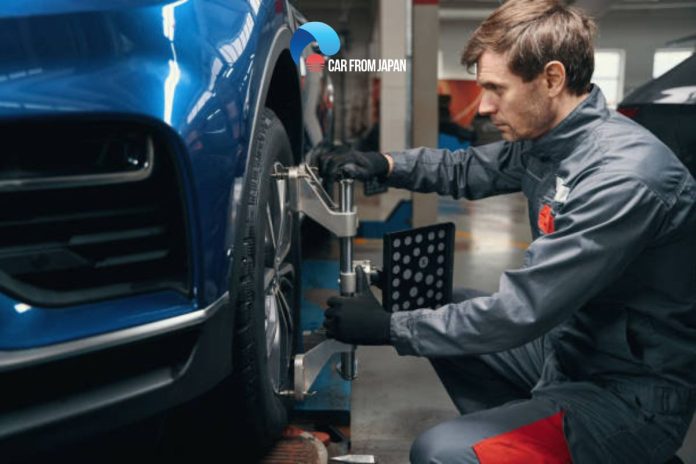
Is there a persistent pull through the steering wheel? Do you notice uneven tire wear sooner than expected? Are faint vibrations becoming more common? That could be your suspension showing warning signs. These are common clues that signal drifting alignment. The root causes are deeper.
Alignment is the problem. It is not the cause. Worn joints and other components are the potential culprits. They can no longer hold the wheels in their proper position. Understanding the basics of your car’s suspension helps spot the problems early.
Contents
What Wheel Alignment Really Means
How the wheels sit in relation to each other and the road influences wheel alignment. It includes three precise angles. They control how your tires contact the pavement.
- Camber: The inward or outward tilt. Too much tilt reduces the contact patch. That leads to uneven wear. It also reduces grip during braking or cornering.
- Caster: It affects steering ability and return. It influences how well the wheel returns to the center after turning. The result is a better straight-line control when driving faster.
- Toe: It determines how much the tires point slightly inward or outward, depending on the direction of travel. Even small deviations change contact with the road.
Together, these three things ensure optimal surface contact. They influence stability and predictable steering response. They are calibrated to balance handling and longevity. These angles aren’t fixed. The suspension’s geometry maintains them. Worn components and other external factors can alter their alignment.

Suspension Components That Control Alignment
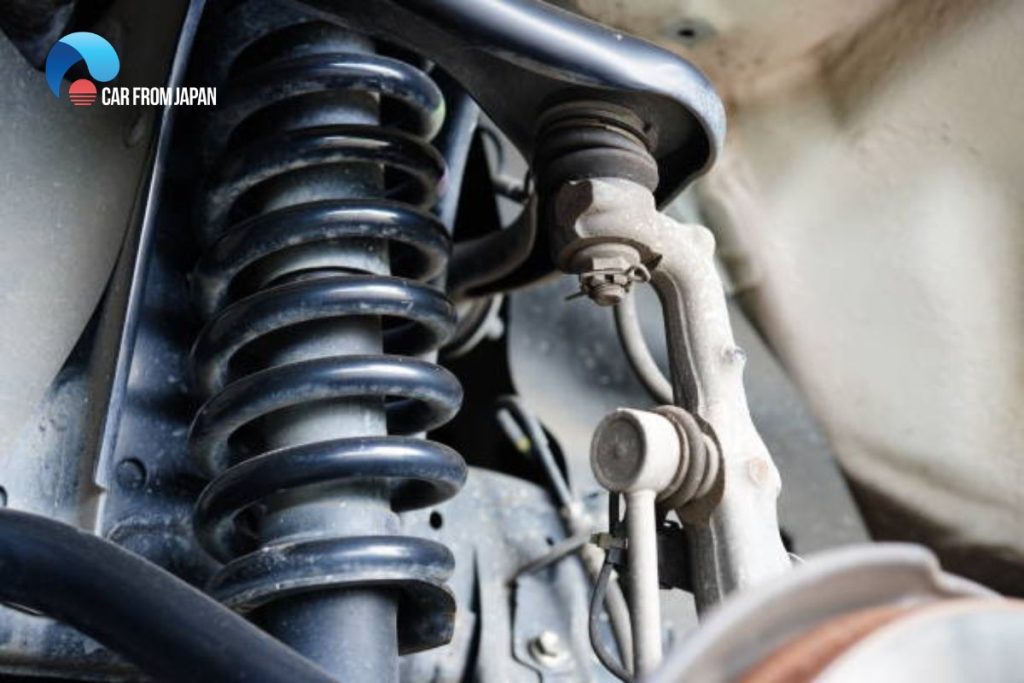
A network of interconnected parts sets your alignment angles. Control arms form the primary framework. They link the wheel hub to the vehicle’s chassis. They pivot via flexible bushings. Ball joints act as pivotal shoulders. They enable steering movement. Tie rods directly transfer steering input to the wheels, controlling toe angle.
As their components wear, their precise tolerances degrade. Worn bushings and ball joints introduce slop. A weak shock absorber allows excessive wheel movement. This permits your carefully set geometry to shift under the forces of braking, cornering, and impact.
A critical player is the upper control arm. It specifically governs the camber angle throughout the suspension’s travel arc. When a vehicle is significantly lifted, lowered, or used for performance driving, the factory arm may no longer allow correct camber adjustment. In these cases, drivers often install durable aftermarket upper control arms to restore proper geometry and regain alignment precision.
Alignment depends entirely on the integrity of these components. Solid parts lock in the settings. Worn parts guarantee they will drift.
Why Performance Vehicles Demand a Precise Suspension Set-up
In a performance-driven vehicle, engineering tolerances are exceptionally tight. A minor alignment deviation tolerated by a commuter car becomes a glaring flaw. It manifests as pronounced understeer or accelerated wear on expensive high-performance tires.
Modifications common to enthusiasts compound this need for precision. Wider wheels and lower ride heights actively alter the suspension’s geometric pivot points. This changes the effective camber and toe gain curves. A complete recalibration is necessary.
Treat suspension and wheel upgrades as integrated systems. Performance car owners consider wheel fitment and suspension calibration when picking parts. Specialists like West Coast Corvette provide essential model-specific components. Changing wheel widths or offsets demands corresponding suspension adjustments. Doing so preserves the intended handling balance.
A precise set-up is non-negotiable. It transforms raw power into controlled performance. It ensures that every modification enhances the vehicle’s dynamics and safety.
Maintenance Tips to Protect Alignment
Protecting your wheel’s alignment requires deliberate action. Your suspension’s health dictates your safety and your wallet. Here are some things to do:
- Check tire pressure monthly. Incorrect pressure distorts the tire contact patch. It forces your suspension to compensate. This causes premature wear.
- Avoid curbs and potholes. A single sharp impact can bend critical components. The damage instantly throws off your precise alignment settings.
- Practice regular tire rotation. This fights uneven wear patterns. Even wear is essential for stable handling and accurate alignment readings.
- Align your vehicle after any suspension change. New springs or shocks alter your geometry. A professional alignment recalibrates the system.
- Inspect suspension components annually. Worn bushings or ball joints will sabotage alignment. Catch them before they fail.
When Alignment Adjustment Is Not Enough
The numbers may look correct. But the car still pulls or chews through tires. That usually means the problem goes deeper than a simple adjustment. Alignment settings cannot compensate for bent metal or worn mounting points. If a control arm is slightly twisted or a subframe has shifted, the geometry will not hold under load.
Worn bushings allow pivot points to wander. Seized adjusters prevent proper setting. Bent components resist correction entirely. In these cases, paying for alignment is throwing money at a symptom. The root problem remains untouched.
Replace the worn parts first. Then align the vehicle. This sequence delivers lasting results. Any shop that offers alignment without inspection is selling false security. Demand the full diagnosis.
Wrapping Up
Your alignment is only as good as the parts holding it. Worn bushings. Loose joints. Bent arms. They guarantee your settings will drift. Skip band-aid adjustments. Fix what is loose and worn first. Then set the angles. The result is a car that tracks straight and tires that wear evenly. You’ll be a driver who no longer wonders what is wrong underneath. You can be more confident on the road.