



Looking for the best drift car straight from Japan? You might have heard about the Nissan Silvia S13 drift car or the Nissan 240SX. Known all over the car scene and specifically within the drift community, the S13 has become a legend on the track and street for decades. Why the Silvia S13 is a must-have in the drifting world, let’s find the reasons below:
Contents
A Short Story Of Nissan Silvia S13 Drift Car
The Nissan S13 is a sports car that was introduced in 1988 and has since become extremely popular among enthusiasts and widely seen as the perfect drift car. The S13 won the 1988 Car of the Year Japan award upon its introduction. It is a legendary model, largely due to its perfect front-engine, rear-wheel-drive (FR) layout and performance parts.
The Japanese Silvia S13 was primarily a two-door coupé that introduced modern, fixed headlights. Its sister car, the three-door hatchback, was named the 180SX (which kept the pop-up headlights). Export versions were rebadged: it was sold as the 200SX in Europe and the 240SX in North America. These export versions often used the 180SX’s pop-up headlight front end.
The S13 initially used the CA18DET turbo engine, but in 1990, it gained the engine that made it famous: the more powerful SR20DET (a two-litre turbo), which is the most sought-after version today.
| Production | 1988-1993 |
| Body style | 2-door coupé/ 2-door convertible/ 2-door fastback/hatchback |
| Platform | Nissan S platform |
| Engine | 1.8 L CA18DE I4/ 2.0 L SR20DE I4/ 2.0 L SR20DET turbo I4 |
| Transmission | 4-speed automatic 5-speed manual |
| Wheelbase | 2,475 mm (97.4 in) |
| Length | 4,521 mm (178.0 in) |
| Width | 1,689 mm (66.5 in) |
| Height | 1,290 mm (50.8 in) |
| Curbweight | 1,180–1,224 kg (2,601–2,698 lb) |
The S13’s story is great, but its drifting success isn’t just luck. Let’s dig into the core formula and engineering advantages that make this car so ideal for sliding:

Is The Nissan Silvia S13 a Good Drift Car?
Whether you’re a seasoned drifter or just getting started and are looking for a good car for drifting, you shouldn’t ignore the Silvia S13 because this car is one of the biggest things to happen to the drifting culture in a long time. It has been a staple in drifting events and has set the foundation for the modern drifting scene, from professional competitions to local drift days.
Here’s why the S13 chassis is practically built for drifting:
Engine options (SR20DET vs. CA18DET)
When the car came out, it was available with either the CA18DE or CA18DET engines, but by 1990, these were replaced with the SR20DE and SR20DET engines. These 2-litre engines offered more performance than the older CA18 engine, and if equipped with Nissan’s SuperHICAS four-wheel steering system, they could be both a great car for driving around town and heading into the mountains for some sideways shenanigans. In the U.S., however, the 240SX came with the naturally aspirated KA24E/KA24DE, which had more torque but lacked the high-revving nature of the SR20.
The fact that Nissan offered a powerful, tunable turbo engine (the DET versions) in a lightweight, rear-wheel-drive car is the main reason the S13 became the king of drifting. They also added performance features like a viscous, limited-slip differential (LSD) on some models, which is essential for consistent power delivery to both rear wheels when sliding sideways.
Chassis & Weight distribution
Building upon the legacy of the S12 Silvia, the S13 offered a lightweight, rear-wheel-drive platform with a perfect balance for spirited driving. The real secret to the S13’s legendary status is its basic structure—the chassis itself.
First, it is incredibly lightweight. Since no S-platform car ever weighed more than 2,800 pounds, the S13 is naturally agile and easy to throw around. Being light means less stress on the engine and easier control when the car is sliding sideways.
Second, the weight distribution is almost perfect. Most S-chassis cars boast a nearly 50/50 balance (some sources say closer to 55/45, but it’s still fantastic). This ideal balance is exactly what drifters look for because it makes the car’s slides predictable, giving the driver precise control when initiating and holding a drift.
On paper, a lightweight, rear-wheel-drive car with near-perfect balance sounds like the ultimate drift machine. In reality, the S13 was even better. Its simple yet effective design truly makes it the ideal platform for controlled sideways action.
Suspension design
The S13’s handling ability wasn’t just luck; it came from some serious engineering advancements for the time. The S13 was one of the first Nissan models to use a sophisticated multi-link rear suspension. This design, which had been tested on concept cars like the Nissan MID4, gives the car excellent stability and control, making it predictable and easy to manage when sliding.
Nissan also introduced high-tech features, like the HICAS (High Capacity Actively Controlled Steering) four-wheel steering system, which helped the car turn more sharply. While this system was later updated to Super HICAS, it shows Nissan was serious about advanced handling.
Plus, the S13 offered a viscous limited-slip differential (LSD) on some models, which is crucial for a drift car, ensuring that power is always sent to both rear wheels evenly to maintain a continuous slide.
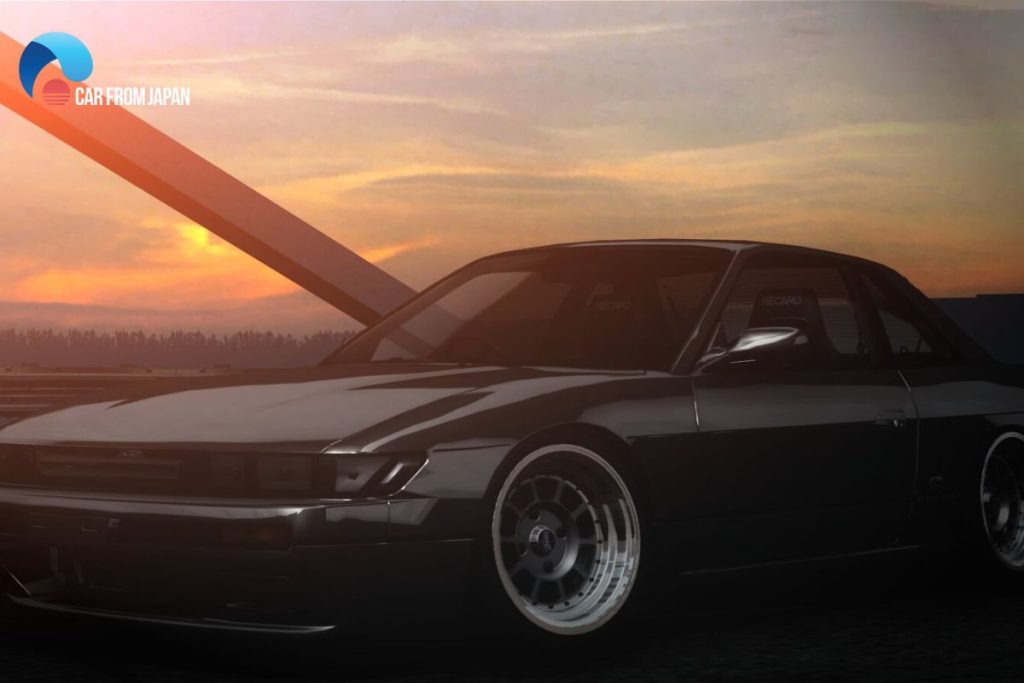
Aftermarket support
The great thing about the Nissan Silvia S13 is that it has amazing aftermarket support. Since this car is so popular, finding parts—both new and used—is easy, and they usually aren’t that expensive for simple repairs. You won’t struggle to find what you need to keep it running.
Now, if you decide to modify it heavily for drifting or add a lot of horsepower, your costs will definitely go up. Like any classic performance car, upgrading the S13 means you’ll spend more on specialised parts, but basic maintenance stays cheap and simple.
Affordability (Historically & Now)
The affordability of the S13 is a huge part of its popularity. It’s one of the few 1990s JDM cars that is cheap to buy, easy to work on, and affordable to run. The basic maintenance costs, like oil changes and insurance, are typically low enough that they won’t break the bank.
While prices vary dramatically based on condition, mileage, and specific model (like K’s, Q’s, or J’s), the initial cost for a used Silvia S13 (1988-1993) is generally in the $15,000 to $30,000+ USD range, based on current import listings. This price point, combined with a robust, tuner-friendly engine, makes the S13 a perfect entry point for aspiring drift enthusiasts.
Conclusion: Still the King of Slide
The simple answer is yes, the Nissan Silvia S13 is still an amazing drift car. Its legendary status is well-earned, thanks to the lightweight chassis, the perfect 50/50 balance, and the easily tunable SR20DET engine. If you’re a big fan of drifting, we believe that the Silvia S13 can satisfy your taste.