
Active filter
Suzuki
Cappuccino
Filter by Make
Filter by Model
Year - Month
Mileage
BodyType
Engine (cc)
Color
Other Filters
Discounts
Special Corners
Used Suzuki Cappuccino for sale(39 Results)

Recommended For You
Browsing History
 25
Suzuki Cappuccino 1993
Nathan Reynolds
 USA
Thank you Jun for helping me through this process. I have received the car and am very happy with it. Although I am little down to see that the car has a hand full of minor issues even after buying it from a well trusted dealership at a higher price than it seems to be worth.
After Delivery Pictures
53Suzuki Cappuccino 1996
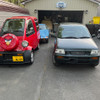
danny deutsch
USAHello Jun, Just wanted to let you know that i picked up the cappuccino from the port and have had nice enough weather to get it out and drive it. Thank you again for all your help. You truly are a pleasure to work with.
After Delivery Pictures
63Suzuki Cappuccino 1997
Mengye Zhao
USAThis is the second car I get from Car From Japan, very much satisfied. The user manuals and a second key are missing initially, I contacted Ami but was not very hopeful. But Ami made sure those items were found at the port and delivered to me via express mail. The car runs great, tiny but still pack a punch. Has some rust and deteriorated rubber seals here and there, but overall excellent for the age.
After Delivery Pictures
49Suzuki Cappuccino 1993
Doran Calvin Isaac Coley
USAEasy process of finding the car I wanted to buy to having the vehicle delivered to my house! I was working with Mr. Austin, and he was forward and direct with all of the information I needed and answered all the questions I had. When I decide to import again I will be using CARFROMJAPAN again as they’ve been nothing but wonderful.
After Delivery Pictures
20Suzuki Cappuccino 1992
Jose Nieves
USAThe experience was amazing. The overall communication and response time was fast and efficient. They were also able to answer all my questions when I asked. I would greatly recommend them as a service. Shout out to Ms. Ami!
After Delivery Pictures
If you are looking for a small, light sports car which is fun to drive and can fit into the smallest of parking spaces, the Suzuki Cappuccino will be a perfect choice for you.
From the first look, you may have to pay a lot of attetion to the car as the Suzuki Cappuccino size is super small. It is a 2-door, 2-seater detachable hardtop minicar manufactured by Suzuki. The vehicle was built to fit into the strict Japanese Kei car regulations for lower insurance and tax. Its production began in 1991 and ended in 1997. Its main competitors are the Mazda AutoZam AZ-1, Honda Beat and Daihatsu Copen.
Whether you are looking for a new or used Suzuki Cappuccino for sale, it is essential to know about the Suzuki Cappuccino engine, specs, features and performance to make a better decision. The overall Suzuki Cappuccino reviews from auto experts and automobile fans below may be helpful for you, let's check it out:
The Suzuki Cappuccino was made as a Kei car, therefore both its engine and dimension were designed following Kei car regulations. The vehicle weighs 725 kg (1,598 Ib) and is 1,395 mm (54.9 inches) wide and 3,295 mm (129.7 inches) long. It is fitted with a turbocharged 3-CL, 657cc DOHC engine (just under the 660cc maximum displacement enabled for a Kei car).
When both seats are occupied, front-rear weight distribution is claimed to be 50-50%. Layout is front mid-engined and rear-wheel drive. The lower front guard panels, roll bar, roof and hood are aluminium.
The Suzuki Cappuccino has three detachable roof panels which means the vehicle can be used as a closed Targa; T-top; coupe, or on retraction of roll bar and rear window, a full transformable. These roof panels are designed to be stowed in the trunk (taking nearly all the boot space). The rollcage/ rear window retracts into the body behind the seats. And one thing that makes the Cappuccino different from many other convertible cars of the time is the rear window is wraparound and glass, with demisting elements.
At the beginning, the Cappuccino was fitted with the F6A engine, later models received a K6A engine that was lighter, produced more torque and had chain-driven instead of belt-driven. Both of them are DOHC 12-valve, inline 3-CL engines which were intercooled and turbocharged. These engines made 64 PS (47kW; 63HP) at 6500 RPM to conform the maximum level of power enabled for Kei cars.
Rear-wheel drive and 4-wheel disc brakes were given to the Cappuccino. Later versions for the Japanese market had got an original production iteration of aluminium double wishbone suspension and speed-sensing electric power-assisted steering.
Driving a Suzuki Cappuccino brings to you an exciting feeling, especially when driving position places you inches from the ground. On twisty roads, the vehicle is at its best, predictably. The skinny tires give to you an excellent amount of grip, whereas the steering (power-assisted, up to spec) feels precise and sharp. The narrow body enables you to pick a desired line within your own lane - an ability all but lost in wide, more up-to-date machinery.
There are some small things you need to notice if you want to buy a Suzuki Cappuccino. If you need to cover motorway miles or you are very tall, the Cappuccino might not be the right car for you. On the other hand, it is a cheap, reliable, fun to drive and a pretty awesome sports car.
Throughout its life, with the exception of a mid-life technical update, there was no significant changes given to the Cappuccino. The vehicle was available in two trim levels, with higher spec BA versions fitted with a limited slip differential, ABS, driver’s airbag and optional electric door mirrors.
A short time after the the car debuted in Japan, Suzuki UK tried to seek type-approval to allow the Cappuccino to be imported into the UK officially. In October 1993 the Cappuccino went on sale in the UK with a price of £11,995. Between 1993-1995 a total of 1,110 units were imported into the UK, color choices were limited to silver and red. Japanese models were available in eight further shades.
1995 saw a significant upgrade for the Cappuccino. A revised engine, which weighed less than its predecessor, switched to chain-drive and rose torque from 63 -> 76Ib ft. Other updates consisted of new alloy wheels, which decreased unsprung weight and an optional 3-speed automatic gearbox.
As with most classics, a full service history will always be expected. In general, Cappuccino made for the UK market are easier to track down evidence of prior work, hence customers seeking for pre-update model would be well advised to go for these.
Suzuki Cappuccino is a affordable sports car to buy although it is quite rare. A 100,000 km- plus car in good condition can cost you from about $6,000 to $10,000 though we would urge caution – viable project cars can be found for even less. On Japanese used cars market, most good Suzuki Cappuccino cars dated from 1993 to 1995 have the price from $8,000 to $11,000. The later models made only for Japanese market tend to be the most desirable, an example with low mileage can cost up to $13,000.