



A loud cabin is rarely one problem. It’s usually several noise sources stacking on top of each other, which is why swapping a single part or adding one mat rarely fixes everything.
A lot of cabin noise begins as vibration before you ever hear it as sound, so it climbs as your speed rises and the road surface gets rougher. The fix starts with diagnosis. Match what you hear to where it comes from.
Below are the seven causes of a loud car cabin, ordered from the simplest to the most involved, with a fix for each.
Contents
- 1. Your Tires Make the Most Noise
- 2. Worn Seals Let Wind Into the Cabin
- 3. The Engine and Exhaust Feed Drone Inside
- 4. That Hum Is Probably a Wheel Bearing
- 5. Bare Metal Panels Are the Amplifier You Forgot
- 6. Factory Insulation Was Built Too Thin
- 7. Loose Trim and Cargo Are the Free Wins
- Bottom Line: Fix the Easy Sources First
1. Your Tires Make the Most Noise
On most cars, the tires contribute more road noise than anything else.
Tread pattern and tire type drive most of it, while worn rubber, low pressure, and poor alignment increase the amount that reaches the cabin. Highway speeds turn a faint hum into a constant drone.
Begin here because it’s the simplest lever you have. Set all four tires to the pressure listed on the door jamb, rotate them on schedule, and when it’s time to replace them, choose a touring or grand-touring tire engineered for quiet running.
A quieter tire on its own can change how the whole car sounds.

2. Worn Seals Let Wind Into the Cabin
That rushing or whistling at speed usually traces back to the seals. Weatherstripping hardens and shrinks as it ages, doors fall out of alignment, and roof racks create turbulence the cabin picks up.
Run your hand along the door and window seals, and look for gaps, cracks, or flattened sections. Replacing worn weatherstripping is inexpensive and often removes the high-frequency wind noise that masks everything else.
If you run a roof rack you rarely use, take it off and listen to the difference on your next highway drive.
3. The Engine and Exhaust Feed Drone Inside
Engine drone, a raspy exhaust, and transmission whine all feed straight into the cabin. Smaller-displacement engines, common in many imported cars, rev higher to keep pace, so their noise lands right in the range your ears notice most.
A leaking exhaust or a failing mount makes it worse. Have the exhaust system inspected for leaks and the engine and transmission mounts checked for wear. Worn mounts let normal vibration travel through the chassis instead of being absorbed, so replacing them quiets the car and tightens how it drives.
4. That Hum Is Probably a Wheel Bearing
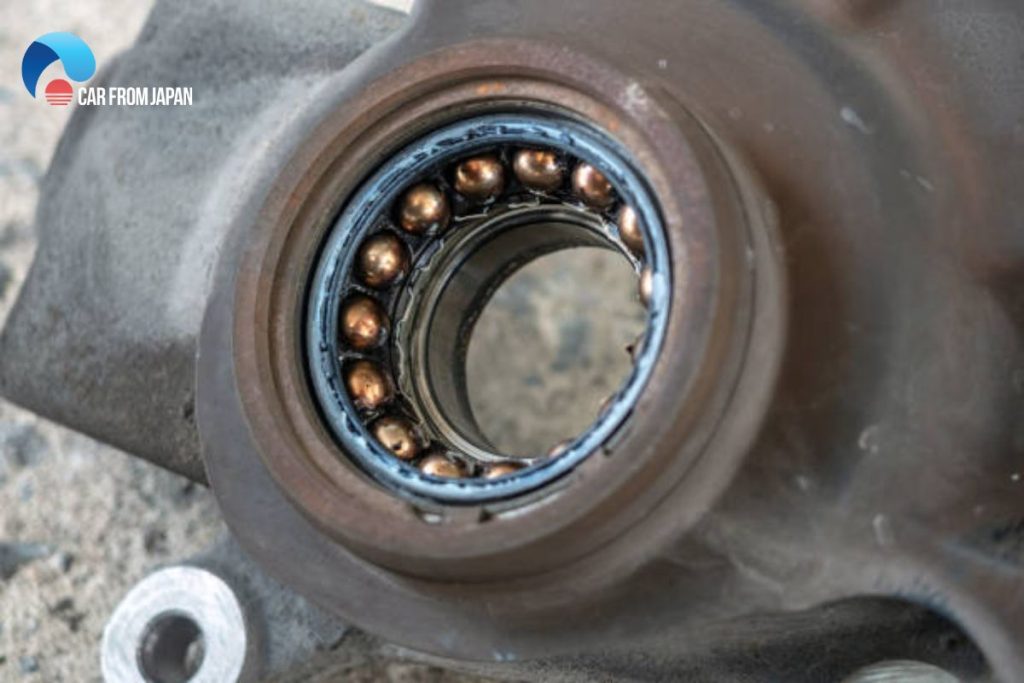
A growing hum that rises and falls with speed often points to a wheel bearing rather than the road surface. Perished suspension bushings, tired shocks, and worn bearings all introduce noise that owners mistake for the car simply getting older and louder.
If you hear a cyclic drone that shifts when you turn, have the wheel bearings inspected. Replacing worn bushings and bearings removes the noise at its source and restores the composure the car had when it was new.
5. Bare Metal Panels Are the Amplifier You Forgot
The doors, floor, and trunk of your car are large panels of thin sheet metal, and thin metal behaves like a drum. It picks up the vibration coming from your tires, suspension, and exhaust, then amplifies it into the cabin.
No amount of tire or seal work fully solves this because the panels themselves are the amplifier. Treating those panels with sound deadening material for cars, like Dynamat, adds mass and damping that convert vibration into low-grade heat at the source.
It’s also the foundation that serious car audio installs start with, since quieter panels let your system play with real clarity.
6. Factory Insulation Was Built Too Thin
Automakers trim weight and cost by using minimal insulation in the floor, firewall, wheel wells, and trunk. Imported and lightweight cars tend to be the thinnest in these areas, which is why they often feel louder than heavier sedans at the same speed.
Once you’ve treated the panels, the next layer is absorption. Acoustic foam over the deadened metal soaks up the airborne noise that damping alone does not catch, especially in the floor and behind interior trim.
The two layers work together. Damping stops the panel from ringing, and acoustic absorption quiets the air inside the cabin.
7. Loose Trim and Cargo Are the Free Wins
Some noise is just things knocking against each other. Loose interior trim, a rattling glovebox, and unsecured items in the trunk produce buzzes and clicks that no amount of insulation will fix. These are the satisfying, no-cost wins.
Tighten loose panels, add felt or foam tape where trim pieces meet, and stow loose cargo so it cannot shift. Clearing these rattles often reveals how much quieter the tire, seal, and panel work have already made the car.
Bottom Line: Fix the Easy Sources First
Work from simplest to most involved. Set your tire pressures and inspect the seals first, then address any worn bearings or mounts, then treat the panels and add absorption where the car needs it most. A quiet cabin is built in layers, and each one removes a different part of the noise.
Diagnose what you hear, fix it at the source, and the car you already own starts to feel like a more expensive one.