


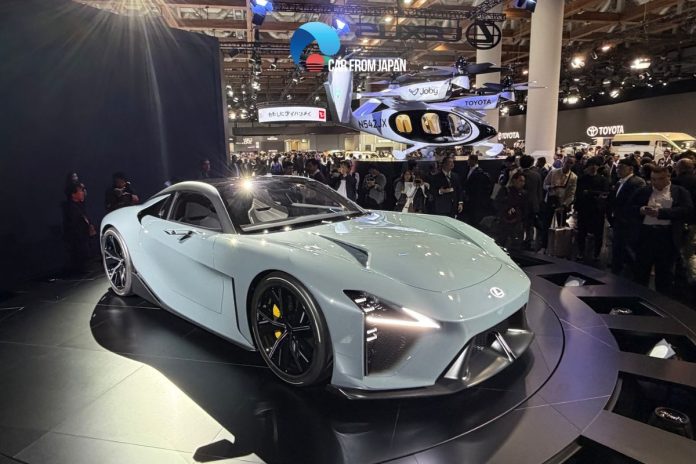
Japanese carmakers built their reputation on reliability rather than opulence or outright thrills. In 2025, that reputation is being rewritten.
Brands like Lexus, Toyota, Nissan, Mazda, and Acura are now delivering genuine comfort and real driving engagement in the same vehicle – combining adaptive air suspension, hybrid refinement, and serious performance hardware.
The result is a generation of Japanese cars that no longer ask buyers to choose between composure and excitement.
Contents
How Japanese Cars Are Redefining Comfort and Performance
From Reliable to Remarkable
For decades, the Japanese value proposition was simple: a car that started every morning and ran for 300,000 km without drama.
Comfort was adequate, performance was sensible, and excitement was reserved for a handful of niche models. Reliability was the whole story.
That story has changed. The Japanese industry has spent the last decade closing the gap with European luxury and performance benchmarks – and in several areas, overtaking them.
The 2025 line-up shows a clear pattern: refinement and engagement are no longer treated as opposites. Cars are being engineered to deliver both.
The Comfort Revolution
The biggest shift is in ride quality. Japanese luxury and large SUV models now routinely use the same sophisticated suspension technology found in German flagships.
The Lexus LS and LX, the Toyota Land Cruiser, and the Infiniti QX80 all rely on air suspension and adaptive damping to deliver ride comfort that genuinely rivals – and in some cases exceeds – their European competitors.
This matters because air suspension is the single biggest contributor to the “premium” sensation behind the wheel. It lets a vehicle soak up broken surfaces in comfort mode, firm up in corners, lower at speed for stability, and raise for rough terrain.
It’s the reason a modern Land Cruiser can feel both rugged and refined, and why the Lexus LS competes directly with the S-Class on ride quality.
The trade-off, as with any air-sprung vehicle, is that these systems are wear components.
As Japanese luxury models age past the 100,000 km mark, maintaining the air suspension is what preserves the comfort that defined them. Here, a specialised aftermarket has stepped in.
Aerosus, which concentrates on pneumatic suspension components for premium and luxury models, supplies OEM-equivalent parts for these Japanese flagships – making long-term ownership far more practical and keeping the original ride character intact rather than chasing expensive dealer repairs.

The Performance Side
While comfort climbed upmarket, performance got serious too. Toyota’s GR division has produced some of the most acclaimed driver’s cars of the decade – the GR Yaris, GR Corolla, and GR Supra.
Nissan revived the Z and continues to develop the GT-R legacy. Honda’s Civic Type R is widely regarded as one of the best front-wheel-drive performance cars ever built, and Acura has sharpened its precision-focused identity.
What’s notable is that these performance cars are increasingly liveable day to day, and the comfort-focused models are increasingly engaging to drive. The two philosophies are converging.
How Japanese Brands Compare in 2025
| Brand | Comfort Focus | Performance Focus | Signature 2025 Strength |
| Lexus | Very high (air suspension flagships) | Growing (F models) | Refinement matching German luxury |
| Toyota | High (Land Cruiser, Crown) | Very high (GR division) | Breadth across both extremes |
| Nissan/Infiniti | High (QX air-sprung SUVs) | High (Z, GT-R) | Performance heritage + SUV comfort |
| Mazda | High (large platform, inline-six) | Medium-high | Premium feel at accessible prices |
| Honda/Acura | Medium-high | High (Type R, Acura) | Driving precision and balance |
The pattern is clear: no major Japanese brand is now content to compete on reliability alone.
Why This Convergence Happened
Several forces drove the shift. Hybrid and electric powertrains made refinement easier – instant torque and quiet running raised the comfort baseline across the board. Global competition pushed Japanese brands to match European ride quality directly.
And a maturing parts ecosystem means sophisticated systems like air suspension can be maintained affordably long after the warranty expires, which has changed the ownership calculus for buyers considering a used Japanese luxury vehicle.
The next few years will likely see this trend accelerate, with air suspension and adaptive damping spreading further down the Japanese line-up much as it has in the European market.
FAQ on Comfort and Performance of Japanese Cars
Do Japanese cars really use air suspension?
Yes – luxury and large SUV models like the Lexus LS and LX, Toyota Land Cruiser, and Infiniti QX80 use air suspension and adaptive damping, much like their European rivals.
Are Japanese luxury cars as comfortable as German ones now?
In ride quality, the top Japanese flagships are genuinely competitive, and some reviewers rate the Lexus LS above its German peers for isolation and refinement.
Is maintaining air suspension on a Japanese car expensive?
Components do wear, but quality replacement parts from specialists cost a fraction of dealer pricing, making restoration practical rather than prohibitive.
Which Japanese brand best balances comfort and performance?
Toyota arguably covers the widest spread – from the comfort-focused Land Cruiser and Crown to the performance-focused GR range – though Lexus leads on outright refinement.
Will more Japanese cars get air suspension?
The trend points that way. As the technology matures and parts become more accessible, air suspension and adaptive damping are likely to spread further across the Japanese line-up.