



Everyone seems fascinated with soundbars these days not only for their design but the quality of sound it produce. If you love music, then Soundbars are for you.
They have a way of enhancing your music experience. Soundbars are not only ideal for your home but they can be used anywhere. These portable devices can be installed anywhere in your car.
Here are some reasons why we think a soundbar will be great for your car.
Contents
- Why Should You Get A Soundbar?
- Soundbar In Car: Is It Necessary?
- How To Install Soundbar In Car?
- FAQs on Soundbar In Cars
- Can a home theater soundbar be used in a car?
- Where is the best place to install a soundbar in a car?
- Will a soundbar drain the car battery when the engine is off?
- Can a soundbar replace all the speakers in a car?
- Why does a car soundbar sometimes produce alternator whine?
- Does a soundbar need a separate subwoofer in a car?
Why Should You Get A Soundbar?
Sound quality
Most cars come with an inbuilt sound system, but their sound quality can be a bit worrisome. Some cars have an incredibly powerful sound system, but a majority of them don’t which is why you need to get a better one.
You can’t get the sound you’re looking for in your car speaker. If you like to hear the bass of your music, you should get a soundbar.
Soundbars improve the quality of the sound system in your car. You will appreciate having a soundbar even more if your car is an older version.
Design
Soundbars are stylish and their sleek design complements the interior of your car. You can install them conveniently in your car without help from anyone.
Affordable
A good soundbar shouldn’t cost a fortune. There are good inexpensive and affordable soundbars you can install to improve your car’s sound system. You will find most soundbars within the range of $100 to $2000.
Soundbars don’t require additional accessories when installing them, and will not allow you to incur any extra costs. You get that booming sound you’ve always wanted even when you are on a budget.
Convenience
You can have your Soundbar installed at the back of your seat, in the car trunk, under the seat, and even on top of the car. You can install it anywhere in your car, all you just need to do is plug it into a power outlet.
With soundbars, you can get a true surround sound experience in your car. Soundbars do not take up space and are easy to set up.
Soundbar In Car: Is It Necessary?
We can agree on the fact that they are inexpensive and sound better than your car speaker.
Getting a good soundbar will improve your audio experience. More so, you can connect your music apps with its Wi-Fi connectivity.
You can pair your mobile devices within minutes to your soundbar device. Some good soundbars come with Google Chromecast and Bluetooth connectivity, which allows you to stream music online.

Soundbars have built-in amplifiers, and most of the models come with an advanced surround system that creates a faux-surround sound. Another feature that makes it great is its wireless subwoofers.
It is worth it to buy a soundbar for your car. They are a whole lot better than the traditional speakers that come with a car. If you have decided to get one, buy the best good audio for your car.
All you need is to plug into your power outlet, and if your car doesn’t have one, you can connect an AC power adapter to connect your soundbar.
How To Install Soundbar In Car?
Here are some simple steps to set you up with the installation process:
Choose a suitable soundbar
Select a soundbar that fits your car’s make and model. Consider the size, power output, and features that you desire.
Prepare the necessary tools
a socket set, wire cutters/strippers, a power drill, screws, a dash kit (if required), and electrical tape.
Disconnect the battery
Before starting any electrical work, disconnect the negative terminal of your car’s battery to prevent any short circuits or electrical damage.
Remove the existing stereo (if applicable)
If your car has a factory stereo, you may need to remove it to install the soundbar. Follow the manufacturer’s instructions or consult a car manual for guidance on removing the stereo.
Mount the soundbar
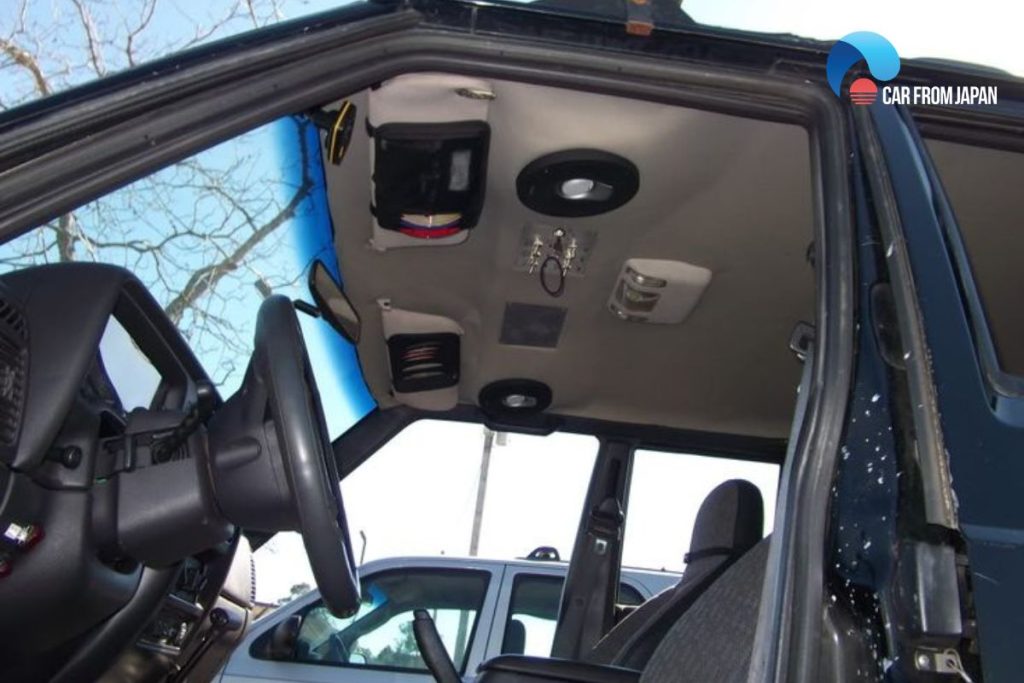
Determine the best location to mount the soundbar. Common locations include the dashboard, above the windshield, or on the roll cage (if you have one). Ensure that the soundbar is securely mounted using screws or brackets.
Run power and audio cables
Connect the power cable from the soundbar to the car’s battery. Use an appropriate gauge wire and route it through the car’s firewall to prevent damage. If your soundbar has an amplifier, connect it to the battery as well.
Connect the audio source
Depending on your soundbar and car stereo setup, you may need an RCA cable, a 3.5mm auxiliary cable, or a Bluetooth connection. Connect the audio output of your car stereo or media player to the soundbar.
Test the soundbar
Turn on your car stereo and test the soundbar to ensure it’s functioning correctly. Adjust the settings on both the soundbar and the stereo to achieve the desired audio quality.
FAQs on Soundbar In Cars
Can a home theater soundbar be used in a car?
Technically, it may be possible with the right inverter and audio connections, but home soundbars are not designed for automotive voltage fluctuations, vibration, heat, or humidity.
A purpose-built automotive soundbar is generally a safer choice.
Where is the best place to install a soundbar in a car?
Placement depends on the vehicle. Soundbars may be installed behind the rear seats, on a roll bar, under the dashboard, or in the cargo area.
The best position balances clear sound projection with passenger safety and visibility.
Will a soundbar drain the car battery when the engine is off?
It can, especially if the soundbar has a powerful built-in amplifier.
The risk depends on amplifier power, listening volume, battery capacity, and how long the system operates without the engine running.
Can a soundbar replace all the speakers in a car?
It can provide a simple all-in-one audio solution, but it may not create the same soundstage as properly positioned door speakers, tweeters, and a subwoofer.
Soundbars are often more effective as an upgrade or supplement.
Why does a car soundbar sometimes produce alternator whine?
A whining noise that changes with engine RPM often comes from a grounding problem, electrical interference, or poorly routed signal and power cables rather than a defective soundbar.
Does a soundbar need a separate subwoofer in a car?
Not necessarily, but compact soundbars usually struggle with deep bass because of their small drivers and enclosures.
A separate subwoofer can improve low-frequency performance.