


Road trips have a reputation for being the cheap way to travel. No airfare, no baggage fees, no rental counter — just you, the car, and the open road. That reputation is how most trips get planned: someone estimates the fuel, adds a rough figure for hotels, and calls it a budget.
Then the trip happens, and the number at the end doesn’t match the number at the start. Not because anything went wrong, but because a road trip is made of far more moving parts than the tank of gas everyone focuses on.
Here’s what actually goes into the total — and how to estimate it before you leave instead of discovering it afterward.
Contents
Fuel: the biggest variable, and the easiest to get wrong
Fuel is usually the single largest line in a road trip budget, and it’s also the one people estimate most casually. The instinct is to think in tanks: “it’s about three tanks each way.” That works until you realize a tank is not a fixed cost — it depends on where you fill up, and how far that tank actually gets you.
The real figure comes from three numbers multiplied together: total distance, your car’s fuel consumption, and the price of fuel along the route. Change any one of them and the total shifts significantly.
Distance is the part people underestimate most. The route your map app shows is the direct line between start and finish, but road trips are rarely direct. There’s the detour to the viewpoint, the drive to dinner once you’ve checked in, the backtrack when you miss an exit, and the day you decide to visit something forty miles off the highway. A 1,200-mile trip on paper is often 1,400 miles in practice.
Consumption is the second variable, and it’s rarely what the spec sheet promises. Highway cruising is where most cars perform best, but a loaded vehicle — four people, luggage, maybe a roof box — burns noticeably more than the same car with one person in it. Mountain routes, air conditioning running all day, and stop-and-go traffic through cities all push the real figure above the advertised one.
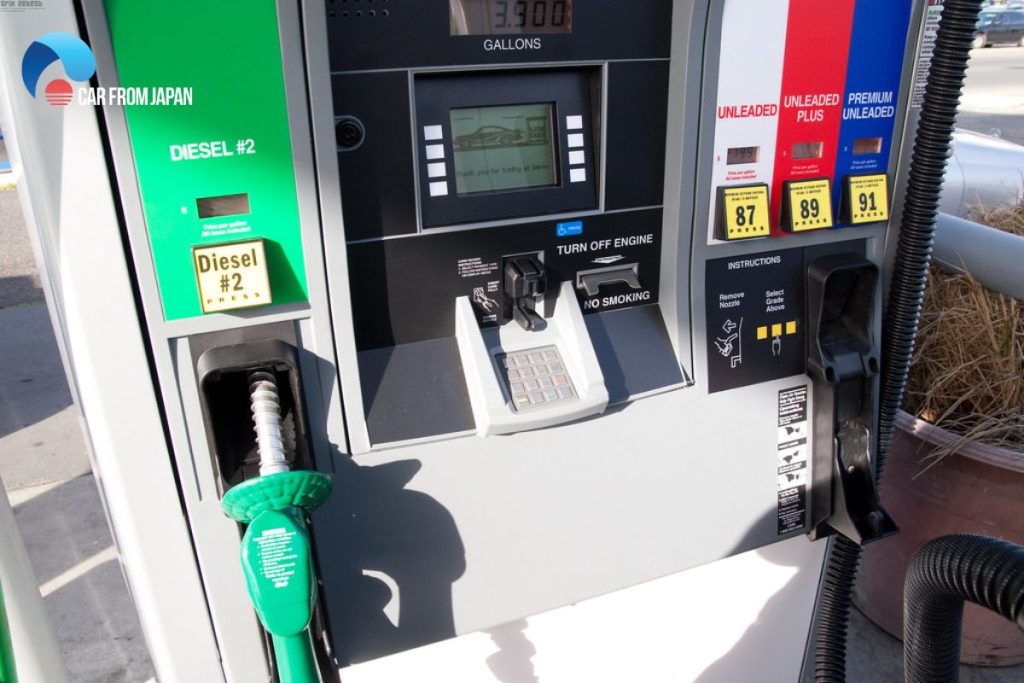
Fuel price is the third, and it varies more than travelers expect. Prices differ between regions, and highway service stations are almost always more expensive than stations a few minutes off the exit. On a long route crossing several areas, the average you actually pay can be well above the price at your local station back home.
Fuel prices and vehicle efficiency can dramatically change the total cost of a road trip. Before you finalize your budget, it’s worth running the numbers with Calculator.io to estimate your fuel expenses based on your travel distance, your car’s fuel economy, and current gas prices. It takes a couple of minutes, and the result is usually more sobering — and more useful — than a guess based on tanks.
Where you sleep
After fuel, lodging is typically the biggest expense, and it’s the one with the widest range. The same route can be done for almost nothing or for a small fortune depending entirely on this line.
The trap is treating lodging as a fixed nightly rate times the number of nights. In practice, prices swing with location and timing: a room near a popular national park in high season can cost several times what a similar room costs an hour down the road. Booking as you go gives you flexibility but usually costs more, especially on weekends or during holidays, when late availability comes at a premium.
There’s also the question of how many nights you’ll actually need. Travelers routinely plan aggressive daily distances, then discover that ten hours of driving isn’t sustainable day after day. The extra night you didn’t plan for is a real cost, and it’s a common one.
Food on the road
Food is the expense that quietly doubles. At home, you have a rough sense of what you spend on meals. On a road trip, almost every meal is bought, often at highway stops where prices are higher, and options are limited.
Three purchased meals a day per person, plus coffee, snacks and drinks during long driving stretches, adds up faster than most people expect over a week. This is also the line with the most control: a cooler with drinks and simple breakfast supplies can cut the food budget meaningfully without changing the trip at all.
Tolls, parking and crossings
These are small individually and easy to forget entirely, which is exactly why they distort budgets.
Toll roads on a long route can add a real sum, particularly if your route crosses several toll systems. Parking is the other one — city parking, hotel parking that isn’t included, and paid lots at popular attractions. Add ferry crossings, bridge tolls, or park entry fees where relevant, and you have a category that can quietly reach a few hundred dollars on a long trip while never feeling like a real expense in the moment.
What the car costs you beyond fuel
There’s one more line that almost nobody includes: the wear the trip puts on the vehicle.
A long trip consumes tires, brakes, oil and service intervals in a compressed period. You don’t pay for it during the trip, but you pay for it eventually — the maintenance you’d have done in eight months arrives in five. It’s not a reason to skip the road trip, but it belongs in an honest accounting of what driving 2,000 miles actually costs.
The practical version of this is preparation. A pre-trip check — tire pressure, fluids, brakes, a spare that’s actually usable — is a small cost that protects against a much larger one. A breakdown far from home is the single fastest way to destroy a travel budget, between towing, emergency repair rates, and the unplanned night in whatever hotel is nearest.
Two trips, same route, very different totals
Consider two travelers driving the same 1,500-mile route over a week.
The first drives a fuel-efficient compact, books lodging in advance slightly outside the tourist centers, packs breakfast and snacks, and takes the free route where the toll road saves only twenty minutes. The second drives a larger, thirstier vehicle fully loaded, books rooms the same day near the attractions, eats every meal out, and takes every toll road available.
Same distance, same destinations, same week. The second trip can easily cost double — and the gap isn’t one dramatic expense. It’s fuel economy, lodging strategy, food and tolls, each pulling in the same direction at once.
Estimate first, then decide
None of this is an argument against road trips. It’s an argument against guessing.
The trips that go over budget usually do so because only one line — fuel — was estimated at all, and even that one was estimated loosely. Work out your realistic distance, check what your car actually consumes, look at fuel prices along your route, then add lodging, food, tolls and a buffer for the things you haven’t thought of.
Do that, and you get two things at once: a number you can trust, and the freedom to adjust it. Maybe you take the more efficient car. Maybe you stay one town further out. Maybe you decide the extra cost is worth it and stop worrying about it entirely.
That last one is the real point. A road trip is more fun when the budget isn’t a mystery you’re solving as you go.