


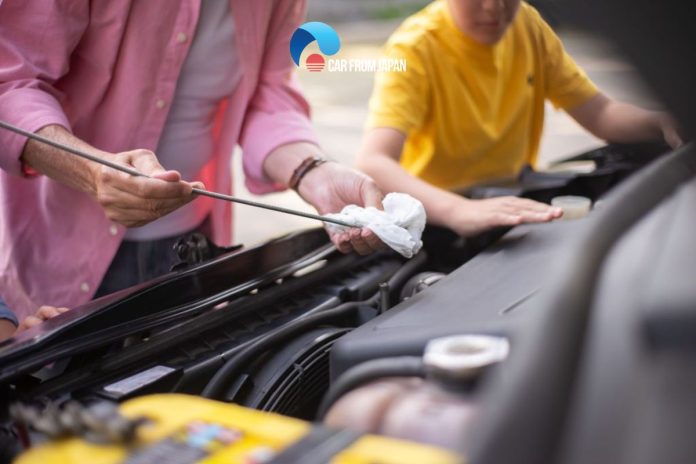
Now that you have a car, it is important to keep in mind that you should do routine car maintenance. That way you can identify issues before they become serious problems and extend the lifespan of your vehicle.
Car Maintenance Checklist For Beginners
But what should go into vehicle maintenance? Also, what should you ensure is done when you take your car to a professional automotive facility? Here is a basic car maintenance checklist to keep in mind.
Engine oil and oil filter changes
Getting your oil changed is important since you need oil to lubricate your engine, reduce wear and tear on it and cool it. Additionally, oil filters should be regularly replaced in order to protect your engine from debris and other contaminants.
Depending on manufacturer recommendations and other factors, such as typical driving conditions, you should get both changed around every 3,000-10,000 miles or 3-12 months.
Tire pressure checks
Checking tire pressure is important since not doing this can negatively affect your driving performance, fuel efficiency and how long your tires last.
Generally, check it once a month. Also do this prior to making long trips and whenever you are planning to carry excessive weight. Use a tire pressure gauge to do so.
Tire tread inspection
A type of vehicle inspection that you can do with a penny is a tire tread inspection. If you insert one into the tread with Lincoln’s head facing downward and the top of that head is visible, your tire needs to be replaced.
That is because this would indicate that you have 2/32 of an inch or less of tread. Also, make sure to check different areas of your tires since they can wear in an uneven fashion.
Note that your tires should have more tread if the road conditions are wet. A similar quarter test will allow you to test for that with 4/32 of an inch being the focused-on measurement there.
Tire rotation and wheel alignment
Tread wear patterns will usually vary from one tire to another because their wheel positions result in different parts of them being affected in different ways.
This can relate to weight distribution and the effects of steering and braking. Tire rotation helps keep that wear balanced; do this roughly every 5,000-7,500 miles.
Also, wheel alignment can be done by a professional to ensure that all of a car’s wheels are facing the directions that they should be.
Brake inspections
Car owners should get their brakes inspected around every 6,000 miles or six months, but make sure to check the recommended guidelines for your specific vehicle.
Regardless, they will gradually wear out, and excessively worn brakes can create dangerous situations on the road.
Battery testing
Battery checks are important to do since the car’s battery gets it started and powers its electrical systems while testing can identify a weakened battery before it fails.
Generally, get it tested once a year, more often once the battery reaches three years of age or you notice warning signs, such as electrical issues or the engine struggling to start.
Coolant and other essential fluids
In most cases, coolant, engine oil, brake fluid, transmission fluid and steering fluid are essential for a car to run properly.
As for coolant, those who are regularly driving their cars in cold winters or hot summers should be especially attentive to it. In any case, checking it about once a month, regardless of season, is recommended.
Engine air filter and cabin air filter
The engine air filter catches dirt, dust, pollen and other particles so that they do not get into the engine while the cabin air filter does the same prior to that air reaching you as a driver and your passengers.
In general, both should be replaced around every 12,000-25,000 miles, but reduce that general timeline significantly, potentially by as much as half, if your car is regularly being driven in dusty or smoggy conditions or on gravel.
Note that when someone simply says, “Air filter,” they are normally referring to the one that is protecting the engine.
Windshield wipers and washer fluid
Windshield wipers should be replaced at least once a year, much sooner than that if they become ineffective. Those who regularly drive in very hot or very cold climates may need to replace them more often than once a year.
How often washer fluid should be refilled depends on how often it is used, but it is a good idea to check it once a month.
Those who are living in cities that have cold winter climates could consider using winter wiper blades and winter-rated washer fluid.
Headlights, brake lights and turn signals
About once a month, check your headlights, including both high and low beams, brake lights and turn signals to ensure that they are working.
DIY Maintenance vs. Professional Service
Several of these maintenance tasks can be done at home, including by a new car owner, while others should be handled at a professional service center, such as Old Orchard Nissan service center.
Ones that can usually be checked at home include:
- tire pressure
- fluid levels
- lights
- windshield wipers
- visual tire inspection
Conversely, these should normally be taken care of by a professional:
- brake service
- diagnostics
- alignment
- battery replacement
- fluid changes
- other maintenance that requires special tools or experience
Conclusion
Regular maintenance is important for vehicle reliability, safety and long-term performance and will help you avoid preventable problems and identify issues before they result in expensive repairs being necessary.
Following a basic maintenance schedule will allow you to do that!