


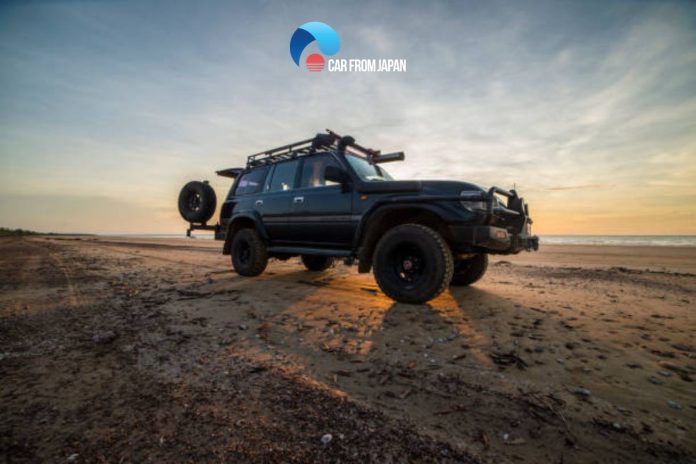
The Toyota LandCruiser 70 Series has a following few vehicles match, and Japan is one of the best places in the world to find one. The Japanese domestic market ran variants that were never sold elsewhere, the trucks are often lower-kilometre than local equivalents, and the 70 Series is simple enough that a well-bought example has decades left in it.
It is also an easy purchase to get wrong, and the first mistake usually happens before the vehicle is even chosen.
Contents
- Know exactly which variant you are buying
- Check your own import rules before you bid
- A few points that apply almost everywhere
- Japan is right-hand drive
- Asbestos and restricted materials
- Check for rust, properly
- Read the auction sheet, not the photographs
- Budget the landed cost, not the purchase price
- After it lands
Know exactly which variant you are buying
This is where 70 Series imports differ from most JDM purchases. “70 Series” covers a production run spanning four decades and a long list of variants, and Japan sold several that never reached other markets. The LJ70 Bundera, the KZJ71 and KZJ78, and a 2014 to 2015 re-release of the 76 and 79 fitted with a petrol V6 rather than a diesel are all Japanese-market propositions. Engines across the JDM range included the 3B, 13BT, 2L-TE and 1KZ-TE alongside the more familiar 1HZ.
Two trucks that look near-identical in photographs can differ in engine, drivetrain, suspension and interior trim. That matters when you are pricing the purchase, and it matters far more once the vehicle lands and you need something for it.
“We get enquiries from people who have just landed an import and assumed it would take the same parts as a locally delivered truck,” says Matt, who runs 70 Series parts specialist 70 Series Store. “The Japanese-market variants ran different engines and different trim, so some things bolt straight on and some don’t. Work out exactly which variant you have bought before you order anything.”
Take the model code, engine code and build date from the compliance plate and the auction sheet, and keep all three somewhere you will find them again. You will need them every time you buy a part for the life of the vehicle.
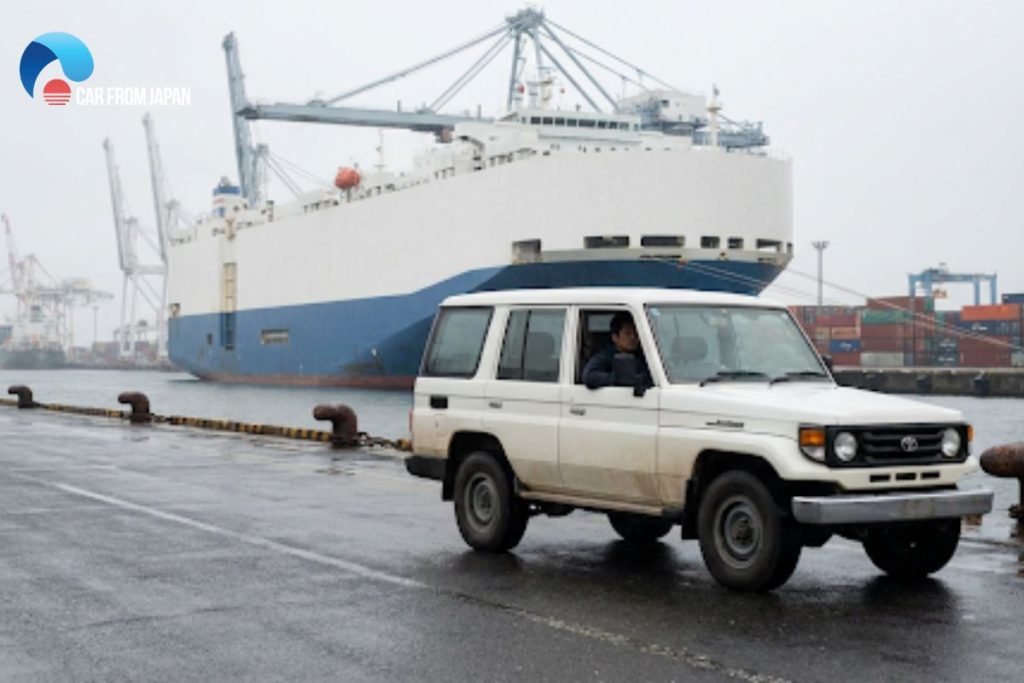
Check your own import rules before you bid
Import eligibility is decided by the destination country, not the seller, and getting it wrong is the most expensive error available.
Most countries gate imports on vehicle age, but the thresholds vary widely and the qualifying date usually rolls forward continuously, so a truck that is ineligible this year may qualify next year. Some jurisdictions apply separate age rules to safety standards and emissions standards, meaning a vehicle can clear one and fail the other.
A few points that apply almost everywhere
- Approval often has to be in place before the vehicle ships. Buying first and arranging paperwork afterwards is how people end up paying storage on a truck they cannot land.
- Newer vehicles usually need compliance work by an approved or registered workshop, which adds significant cost and time compared with an older vehicle entering under an age concession.
- Diesels frequently attract extra scrutiny, and some regions apply stricter emissions rules than the national baseline.
- Registration is often a separate hurdle from import approval. Clearing customs does not mean the vehicle is road legal.
Confirm the current position with your own authority before you bid on anything. This is the part of the process that changes most often.
Japan is right-hand drive
Every JDM 70 Series is right-hand drive. If your country drives on the left, that is a straight advantage and one less problem to solve.
If your country drives on the right, a right-hand-drive import is generally legal in many places but it does change daily use. Overtaking, drive-through windows, toll booths and parking payments all become awkward, and some insurers treat it differently.
That is not a reason to avoid the purchase. It is a reason to be honest about how the truck will actually be used, because conversion is expensive and rarely done well.
Asbestos and restricted materials
Some countries operate strict or zero-tolerance policies on asbestos at the border, with no acceptable threshold and significant penalties for a breach.
The high-risk components are exactly the ones an older 70 Series is full of: head and exhaust gaskets, brake pads and shoes, clutch linings and seals. Vehicles built before the 1990s attract the most attention, which covers many of the most desirable trucks.
Where these rules apply, a detained vehicle means you carry the cost of detention, sampling and laboratory testing while it sits at the port. The practical answer is to have suspect components tested or simply replaced in Japan before shipping, and to keep the documentation. A set of brake pads and a clutch is cheap next to a stuck vehicle.
Check for rust, properly
Japanese vehicles have a good reputation for condition and it is largely deserved. The exception is anything that has spent its life in a snow region, where roads are salted heavily through winter. The resulting underbody corrosion is often far worse than the panels suggest.
Ask for underbody photographs specifically: chassis rails, spring hangers, tray or tub mounts and the rear crossmember. A tidy body over a rotten chassis is not a bargain at any price.
Read the auction sheet, not the photographs
Japanese auction grades are a genuine quality signal, but the grade on its own is not the whole story. The inspector’s diagram and written notes matter more, because that is where corrosion, panel repairs, paintwork and mechanical faults are actually recorded.
Have the sheet translated properly if you cannot read it. A grade 4 with a clean diagram and a grade 4 covered in repair marks are very different vehicles behind the same headline number.
Budget the landed cost, not the purchase price
The auction price is the smallest part of the total. Add export handling, shipping, marine insurance, import duty, sales tax, any biosecurity or quarantine inspection, customs brokerage, transport from the port, compliance work where required, and your local roadworthy or registration inspection.
Plenty of first-time importers budget the car and then get caught by everything after it. Work out the landed figure before you bid, not after.
After it lands
Assume the truck will need something. Even a good import usually wants fluids, filters, brakes and a proper going-over before it earns your trust, and if you replaced brake or clutch components before shipping you will want them checked anyway.
A 70 Series is one of the few vehicles genuinely worth keeping for decades. The first few months of ownership are rarely the cheapest ones.