


Your car’s engine is a complex machine that requires a multitude of parts to work in perfect harmony, and even a tiny deviation in any of these parts will affect its function.
Even a dirty Exhaust Gas Recirculation valve can result in rough idling or engine stalling, lower fuel economy, and might cause serious engine damages, thus expensive repairs.
Knowing how to clean EGR valve is a simple and handy maintenance tips that will save you a lot of trouble as well as money.
Since the 1960s, vehicle manufacturers have successfully reduced harmful nitrous oxide emissions with the installation of the Exhaust Gas Recirculation (EGR) valves.
The EGR valve recirculates exhaust generated during the engine’s combustion back into the combustion cycle, thereby reducing the engine’s temperature and lowering the production of poisonous nitrous oxide.
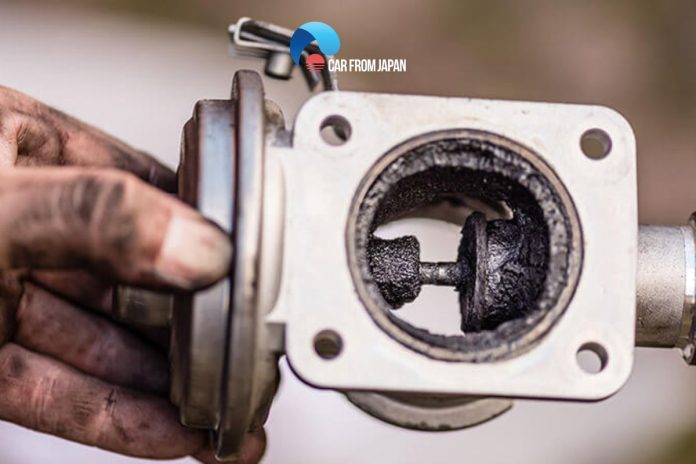
EGR valves open and close to control the gas flow. Over time, the exhaust builds up a hard and thick wall of carbon, locking the EGR valve open or closed.
This will block system passages, thus increasing the engine’s temperature and increasing nitrous oxide emissions.
Worse, a dirty EGR valve can lower mileage and the lifespan of the engine, or cause rough idling, stalling, or knocking.
That’s why car manufacturers recommend cleaning the EGR valve and passages every 50,000 miles or fewer.
The good news is you do not need to take your car to the shop so regularly. Instead, learn how to clean the EGR valve right in your garage today.
Contents
- What Does An EGR Valve Do?
- Why You Should Know How To Clean EGR Valve?
- Common Bad EGR Valve Symptoms
- What To Use To Clean EGR Valve?
- How To Clean EGR Valve?
- FAQs on Cleaning EGR Valve
- Why does my car idle worse after cleaning the EGR valve?
- Do diesel and gasoline EGR valves require different cleaning methods?
- Why does the EGR system get dirty faster in city driving?
- Can I use carb cleaner or brake cleaner to clean the EGR valve?
- How do I know if my EGR passages are still clogged after cleaning the valve itself?
What Does An EGR Valve Do?
The combustion occurs inside the engine’s combustion chamber generates exhaust and a lot of heat, which can exceed 2,500 degrees Fahrenheit.
At such temperatures, different elements in the air-fuel mixture that is ignited inside the chamber are burned and produce nitrogen oxides, a substance harmful to human health and the environment.
During operation, the EGR valve allows a small amount of exhaust gases to recirculate back through the intake manifold and back into the combustion chambers.
When mixed with the air-fuel mixture inside the chamber, these recirculated exhausts will reduce the high temperatures during the combustion process.
The lowered temperature serves to reduce the formation of poisonous nitrogen oxides.
In addition, by preventing overheating of the engine and reducing underhood temperature, the engine’s overall health and lifespan, plus all other underhood components, will be maximized.
Why You Should Know How To Clean EGR Valve?
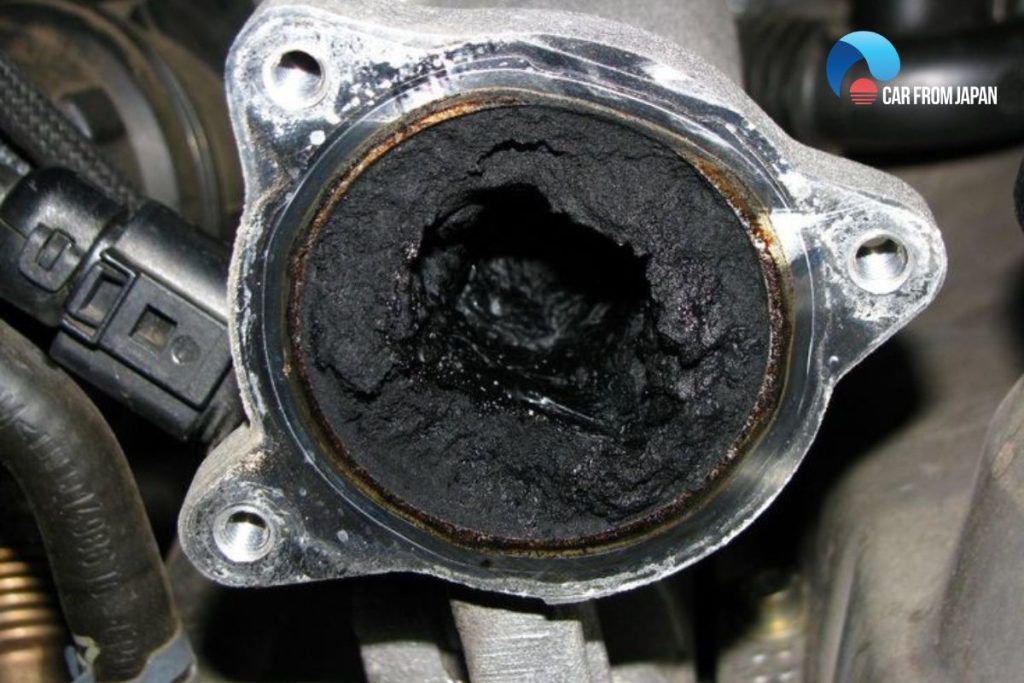
Over time, the recirculated exhaust builds up a hard and thick wall of carbon, messing with the EGR’s valve’s ability to open and close to control the gas flow.
As a result, this impedes exhaust recirculation and therefore increases the temperature inside the chamber, leading to overheating and increasing nitrogen oxide emissions.
In detail, if the EGR valve is stuck open, a continuous flow of exhaust gases enters the cylinders, disrupting the combustion process. This will cause the engine to act like it wants to stall, idling roughly or surging.
If the valve is stuck closed passages become clogged, and detonation could occur in the combustion chambers.
This happens because the cylinder temperatures will increase, resulting in fuel igniting early before the planned combustion. In severe cases, strong detonations can seriously overheat and damage your engine.
Knowing how to clean the EGR valve is a crucial step in solving these common engine problems.
Common Bad EGR Valve Symptoms
You should check and clean your EGR valve if the following problems occur:
Engine noises
If the valve is stuck closed or passages become clogged, cylinder temperatures will increase, resulting in fuel igniting before the combustion.
When this happens, you’ll notice a knocking or tapping noise coming from the engine.
Fuel smells
Notice the fuel smells from the underhood area when the car is running. It can be a sign of a faulty EGR valve.
Engine stalling or rough idling: If the valve is stuck open, a continuous flow of exhaust gases enters the cylinders, disrupting the combustion process. The engine will idle roughly, surge, or stall as it warms up or as you drive at low speeds.
Check Engine light
On newer car models with electronic valves, the vehicle’s computer will trigger the Check Engine light when there is a problem with the EGR valve and passages.
To avoid these headaches, clean the EGR valve and passages every 50,000 miles or ideally more regularly over the weekend at home. You only need a few common tools and a quality EGR valve cleaner.
Read More: Common Symptoms Of A Bad EGR Valve You Might Not Know
What To Use To Clean EGR Valve?
- Safety first: Goggles for your eyes and acid-resistant gloves for your hands
- EGR valve or carburetor cleaner
- New EGR valve gasket, if necessary
- Repair manual, if necessary
- Pipe cleaning wire brush
- Ratchet
- Ratchet extension
- Socket set
- Adjustable wrench
- Dull scraper
How To Clean EGR Valve?
Safety first. Always make sure your car is parked on a flat and even surface. Begin by removing the cables on your car’s battery.
Locate the EGR valve
Depending on your car’s make and model, your engine may be using one of three common types of EGR valves.
If unsure, check your user’s manual to determine the type of EGR valve you’re dealing with:
- Older models will often come with a vacuum-controlled EGR valve, which is typically a round, semi-flat metal disk of about 3 inches thick. You’ll see a thin vacuum hose connected on top.
- Newer models will have an electronic-vacuum-controlled valve. It will look generally like the older vacuum-controlled valve, except you will find a small sensor on top, plus an electrical harness that connects the sensor to the car’s electrical system.
- The latest generation of EGR valves is the new electronically controlled digital valve. Its shape is typically a cylinder or a block, with attached sensors on top and an electrical harness.
The EGR valve is most often found towards the top or side of the engine, sometimes obstructed by other components. Look around the side of the cylinder head, near the throttle body, firewall, or intake manifold.
If you don’t see it, go to your manufacturer’s website and enter your car’s make, model, and engine size to search for the exact location of the valve. Otherwise, consult the repair manual for your particular vehicle make and model.
The manual will also include helpful information for EGR valve maintenance, including troubleshooting procedures, and how to remove and replace EGR system components like the EGR sensor, vacuum hoses, and pipes.
Remove the EGR valve
Step 1
EGR valves in older cars will often have a thin vacuum hose attached to them. Carefully disconnect the hose from the valve, as this is a very thin hose and is prone to damage unless you handle it with care.
Check the vacuum hose for splits, cracks, or hardening and replace if necessary. Damaged vacuum hoses cause poor EGR valve operation and EGR system failure.
Vacuum hoses are prone to damage due to high underhood temperature caused by a heated engine.
Step 2
Follow the vacuum hose to the component attached at the other end, and inspect any other hoses connected to that other component. Check for splits, cracks, or hardening and replace if necessary.
Step 3
Unplug any electrical connectors from the EGR valve. If necessary, spray some WD40 on the bolts to unscrew more easily. The spray will handle the rust built up on the bolts over time.
Step 4
Unscrew the valve’s two or four mounting bolts using a ratchet, extension, and socket. Depending on your car’s make and model, the EGR valve may connect to a pipe coming from the exhaust manifold.
Remove the pipe using a wrench. Alternatively, disconnect the pipe at the exhaust manifold.
Step 5
After removing the EGR valve, check the valve’s gaskets. Check for cracks or uneven wear and replace it if necessary. Otherwise, recycle it.
EGR valve cleaning
Step 1
Safety first as always. Put on your safety goggles and acid-resistant gloves. For extra caution, wear a mask.
Remember that you’re going to remove carbon deposits from different components of the valve, which can get airborne and you might inhale them.
Step 2
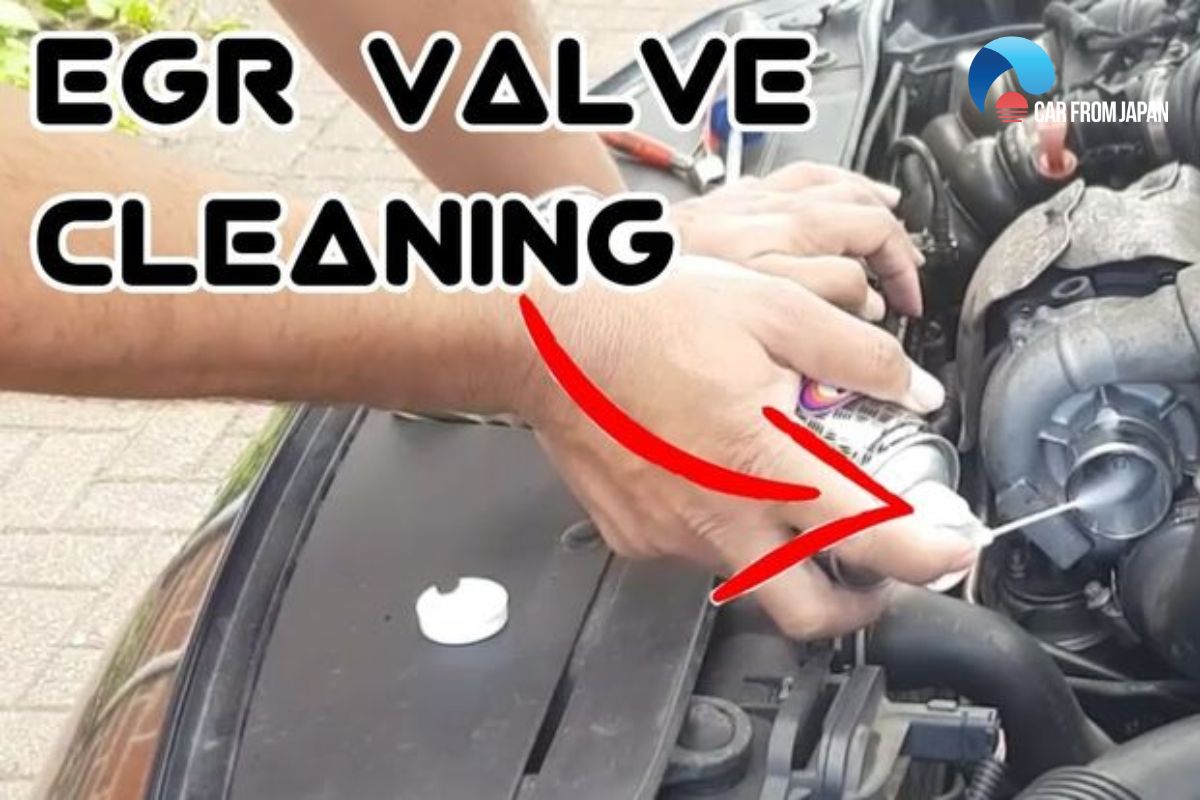
Spray carbon deposits with a quality EGR-valve or carburetor cleaner.
If the cleaning solution comes into contact with any plastic parts and electrical components still attached to the valve, immediately wipe them clean to prevent corrosion and damage.
Step 3
Use a dull scraper and a pipe cleaning brush to scrub carbon buildup. Then use a soft brush to remove the buildup and wipe the surface using a clean rag.
Repeat the process until it is clean. Avoid gouging mounting and sealing surfaces, as this will cause exhaust gases to leak.
Note 1
For very stubborn carbon deposits, soak the EGR valve in the cleaning solution for a few minutes for it to penetrate.
Make sure to steer clear from electronics, electrical components, or plastic parts to avoid damaging the valve.
Do not leave the valve soaking in the cleaning solution overnight, or you will risk ruining sensitive parts. Then repeat the brushing process above to get rid of hard buildups.
Note 2
In case there are carbon deposits accumulated inside the intake manifold, apply the EGR valve cleaner through the intake manifold.
It is best to check the cleaner manufacturer’s manual to see if you can apply the cleaner to clean the intake manifold.
Sometimes you might need to use a commercial cleaner designed for this purpose, such as the Seafoam Motor Treatment.
Replace the EGR valve
Once you have dealt with carbon buildup, including cleaning the passages and sealing the surface, you can put all the components back to where they originally belonged, including the gasket.
Use the correct torque to screw and tighten bolts. Replace the gaskets, then reconnect the vacuum hoses and pipes, and any electrical harnesses.
EGR valve testing
The last step of knowing how to clean the EGR valve, which you should not skip, is testing whether your repair has worked. This is relatively straightforward.
After cleaning, the engine should idle smoothly. There should be no engine stalling or strange sounds, and no fuel smell from the underhood.
FAQs on Cleaning EGR Valve
Why does my car idle worse after cleaning the EGR valve?
You may have loosened carbon that entered the intake manifold or didn’t seat the valve properly.
The ECU might also need time (or a reset) to recalibrate air–fuel trims.
Do diesel and gasoline EGR valves require different cleaning methods?
Yes. Diesel EGR valves often deal with heavier soot and oil sludge, needing stronger solvents or ultrasonic cleaning.
Gasoline EGRs usually need milder treatment.
Why does the EGR system get dirty faster in city driving?
Stop-and-go driving keeps exhaust temperatures low, allowing carbon to settle and harden inside the EGR valve and passages much quicker than in highway conditions.
Can I use carb cleaner or brake cleaner to clean the EGR valve?
You can, but with caution. Some EGR valves have rubber or plastic components that can be damaged.
A dedicated EGR or intake cleaner is safer!
How do I know if my EGR passages are still clogged after cleaning the valve itself?
Remove the valve and use compressed air or a flexible brush to check passage flow.
If airflow is weak or uneven, the manifold channels may still be restricted.
Learn detailed steps to clean an EGR valve in this video from BMAC Cars & Mods!
Now you’ve pocketed pro tips on how to clean EGR valve, remember to clean your EGR valve regularly to avoid annoying engine problems and to maximize the lifespan of your engine.






What is the approximate cost of an EGR valve of 1NZfe engine in Toyota Allion 2013 model
What is the approximate price of an EGR valve of 1NZ FE engine used in Toyota Allion 20136 model
Am a proud owner of 1999 Toyota corona premio powered by a 3sd4 engine.
For sometime now it’s given me a headache with rough running and stalling.Thanks for the information and I believe my problem is over.