



You’re stuck in traffic, it’s the middle of summer, and you reach for the AC — only to get a blast of warm air. If you drive a Honda Civic, you’re not alone. AC problems are one of the most commonly reported issues across multiple Civic generations, and while the symptoms can feel alarming, the causes are usually very fixable. Here’s everything you need to know about Honda Civic AC not working:
Contents
Honda Civic AC Not Working: Common Reasons
Before grabbing your wallet or heading to a shop, it helps to understand what’s actually going on under the hood. Most Honda Civic AC failures trace back to a handful of root causes — and knowing which one you’re dealing with makes all the difference.
Low or leaking refrigerant
This is the number one reason a Honda Civic AC blows warm air. Low or leaking refrigerant — often caused by condenser punctures from road debris or compressor shaft seal deterioration — is the most common culprit.
The refrigerant is the lifeblood of the entire system; without enough of it, the AC simply can’t absorb heat from the cabin. Leaks typically show up as oily residue around AC lines, hose connections, or the condenser itself. Worth noting: 10th-generation Civics (2016–2021) have a well-documented history of factory condensers developing tiny holes, and Honda has issued technical service bulletins (TSB 19-091 and TSB A23-039) covering related repairs under extended warranty.
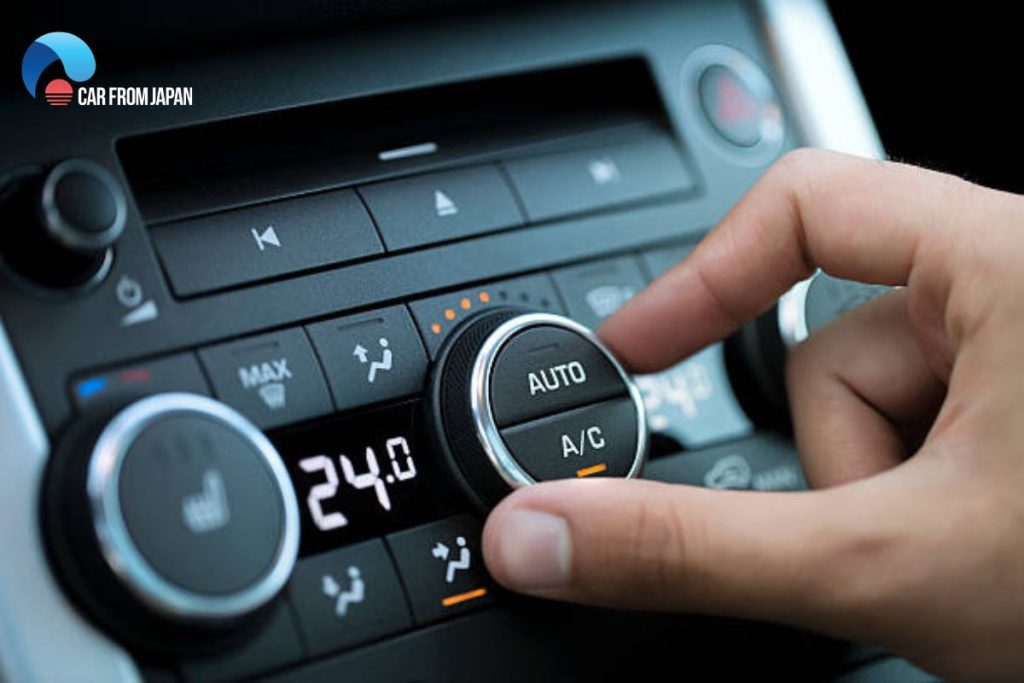
Faulty AC compressor or Compressor clutch
The compressor is the heart of the AC system — it pressurizes and circulates the refrigerant through the entire loop. A faulty AC compressor can result from a lack of lubrication, electrical issues, or internal mechanical failure, all leading to inadequate cooling.
On 8th and 9th generation Civics (2006–2015), a faulty $10 AC relay is actually the most common cause of compressor clutch failure — a cheap and quick fix that’s worth checking before assuming the compressor itself has died. A fully seized compressor is a more serious situation, as it can cause the serpentine belt to shred and lead to other problems like power steering loss or engine overheating.
Blown fuse or Electrical issue
Car Mechan reports that up to 15–20% of perceived AC failures are resolved through simple initial checks like a blown fuse or a severely restricted cabin air filter — meaning a significant chunk of Civic owners paying for shop diagnoses could have fixed the issue themselves for free.
Clogged cabin air filter
It sounds too simple, but a severely clogged cabin air filter is a genuine AC killer. When the filter is blocked, airflow through the evaporator is restricted, and the system can’t cool the cabin efficiently, no matter how hard it’s working. Honda recommends replacing the cabin air filter every 12,000 to 15,000 miles — and it’s a DIY job that takes about five minutes and costs between $15 and $30 for the part.
How To Diagnose The Problem?
Jumping straight to expensive repairs without proper diagnosis is how people waste money. A systematic approach — starting with the simplest checks — will save you time and frustration.
Warning signs to watch for
The symptoms often tell you exactly where to look. Warm air blowing despite the AC being on points toward low refrigerant, a failing compressor, or a blown fuse. Unusual clicking or grinding noises from the dashboard area usually indicate compressor clutch issues.
An AC that only works on one side of the cabin, or makes a clicking sound when switching between temperature zones, often points to a failing blend door actuator — a $30–$60 part. Musty smells coming from the vents suggest mold or mildew buildup on the evaporator core, which is a separate issue from cooling failure but worth addressing.
DIY checks you can do at home
Start with the free stuff before spending anything. First, verify all settings are correct — AC button on, recirculation enabled, temperature at the lowest setting. It sounds obvious, but settings get accidentally changed more often than you’d think.
Next, locate the fuse box (usually under the hood and inside the cabin) and visually inspect fuses related to the AC compressor clutch, blower motor, and HVAC control unit. A blown fuse will show a broken wire filament inside.
Then check the cabin air filter, located behind the glove box — if it looks grey and clogged, replace it before going any further. Finally, inspect the AC lines and condenser for any oily residue, which is a telltale sign of refrigerant leakage.
When you need a professional
If the basic checks come back clean and the system still isn’t cooling, it’s time to call in help. Refrigerant leaks that require system evacuation, compressor replacements, and electrical failures in the climate control module all need specialized equipment and trained hands.
A proper diagnosis from a certified technician will ultimately save money by avoiding unnecessary parts replacements. If you own a 2016–2021 Civic, always check your warranty status before paying for anything — Honda’s extended warranty under the TSBs mentioned above covers parts, labor, and refrigerant for qualifying vehicles.
How To Fix the Honda Civic AC Problem?
Once you’ve identified the cause, here’s what the fix actually looks like — whether you’re doing it yourself or handing it to a shop.
Recharging the refrigerant
A refrigerant recharge is the most common and cost-effective AC fix. The process involves locating the low-pressure service port under the hood, attaching a recharge kit, and filling to the manufacturer’s recommended pressure level. DIY recharge kits with a gauge run $30–$50 and are widely available.
However — and this is important — if the system loses its charge again within a few days, you have an active leak that needs to be professionally located and sealed. Keeping recharging a leaking system is just delaying the real fix.
Replacing the compressor
A failed compressor is the most expensive AC repair on a Honda Civic. A compressor replacement costs around $1,200–$2,600, depending on the model year and whether OEM or aftermarket parts are used. If your Civic is a 2016–2021 model and still within ten years of its original purchase date, visit the dealership first — Honda’s extended warranty may cover this repair entirely. Attempting a DIY recharge before checking warranty eligibility can actually void the coverage, so check first.
Checking and replacing fuses and relays
Fuse and relay issues are the cheapest and easiest fixes on the list. A new AC relay costs $5–$15, and replacing it takes under five minutes. Always replace a blown fuse with one of the correct amperage — never a higher-rated one. If a fuse keeps blowing repeatedly after replacement, that’s a sign of an underlying short circuit that needs professional diagnosis, not just another new fuse.
Replacing the cabin air filter
This is the one fix every Civic owner should be comfortable doing themselves. The cabin air filter sits behind the glove box, costs $15–$30 for a quality replacement, and takes about five minutes to swap out. Beyond restoring proper airflow, a clean filter also improves air quality inside the cabin. Honda recommends replacing it every 12,000 to 15,000 miles, or more frequently if you drive in dusty or heavily polluted environments.

How Much Does It Cost to Fix?
Repair costs vary widely depending on what’s actually wrong. Here’s a realistic breakdown so you know what to expect.
Cheapest fixes first
Starting from the bottom of the cost ladder, a cabin air filter replacement runs $15–$30 for the part and is free if you do it yourself. A fuse or relay replacement is $5–$15. A DIY refrigerant recharge kit costs $30–$50. A professional refrigerant recharge at a shop typically runs $150–$300. These are the checks worth exhausting before spending any more.
The more expensive repairs
Once you move into mechanical territory, costs climb quickly. A blend door actuator replacement runs $30–$60 for the part, though labor adds to that figure. Condenser replacement sits in the moderate range, depending on the generation and shop rates.
Compressor replacement is the big one — expect $1,200–$2,600 all-in, according to Daily Car Tips, with the 10th-generation Civics sitting closer to the higher end due to parts costs. An evaporator replacement can cost $800–$1,500 or more, depending on the shop, as it requires significant disassembly of the dashboard.
Final Thoughts
A Honda Civic AC not working is frustrating, but it’s rarely a mystery. Most problems trace back to a handful of causes — low refrigerant, a faulty compressor, a blown fuse, or a clogged filter — and most of them have clear, well-documented fixes. Start with the simple checks, work your way up, and always verify your warranty status before committing to expensive repairs. A little patience and the right diagnosis go a long way.