


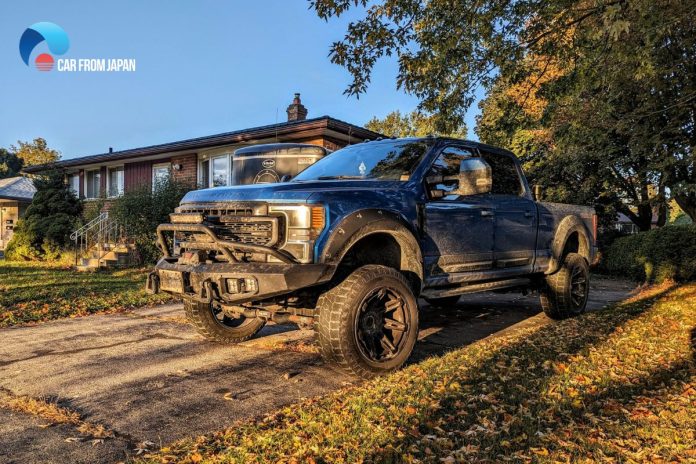
If your diesel truck is idling longer, burning more fuel, or showing a new dashboard warning, the DPF is likely the culprit — it sits in the exhaust and traps soot before it leaves the tailpipe. It’s a small honeycomb ceramic and it’s doing a big job and when it is overloaded, the entire truck feels it — the power diminishes, gas mileage suffers and then the engine eventually protects the emissions system by limiting performance.
Blockage happens because the DPF only cleans itself under the right conditions — city driving, short errands, and heavy idling never let the exhaust get hot enough to burn off trapped soot. Over months, that soot piles up until the filter can’t flow exhaust properly anymore. Understanding what’s actually happening — and what your real repair options are — saves you from throwing money at the wrong fix.
Contents
Common Symptoms of a Clogged DPF
Warning light. This is usually the first sign. A filter-shaped icon (sometimes flashing, sometimes solid) appears on the dash when soot loading crosses a threshold the ECM is tracking. Some trucks show a soot percentage or a direct message instead of an icon.
Loss of power. Once exhaust backpressure builds up, the engine can’t breathe properly. You’ll notice it most under load — towing, climbing grades, or merging onto the highway feels noticeably weaker than it used to.
Poor fuel economy. Every regeneration cycle burns extra diesel just to raise exhaust temperature, not to move the truck. A healthy DPF regens every few hundred miles and the fuel penalty is small. A clogged one regens constantly, and that adds up fast.
Frequent regeneration. If active regen cycles that used to happen every 300–500 miles are now kicking in every 50–100 miles, the filter is struggling to keep up. This is one of the clearest early indicators that something is wrong — either the soot load is too high or a sensor is feeding bad data to the ECM.
Limp mode. If the problem goes unaddressed, the truck protects itself by derating power and speed. This isn’t the engine failing — it’s a safeguard against pushing more exhaust through a filter that’s already dangerously restricted.
Main Causes of DPF Blockage
Short-distance driving. Stop-and-go trips and constant idling keep exhaust temperatures too low for passive regeneration — the single most common cause of DPF problems in trucks used mostly around town.
Interrupted regeneration. Shutting the engine off mid-regen — pulling into a gas station or parking lot before the cycle finishes — is a frequent, driver-caused reason filters clog prematurely. The cycle needs to complete for the soot to actually burn off.
EGR or injector problems. A failing EGR valve or worn injectors change combustion and soot output, overloading the DPF faster than it’s designed to handle.
Sensor failure. The differential pressure sensor and exhaust gas temperature sensors tell the ECM how full the filter is and whether it’s safe to regen. If either one is dirty, clogged, or failing, the ECM either won’t trigger regen at all or won’t trigger it accurately — and the filter keeps loading up in the background.
Ash buildup. Unlike soot, ash doesn’t burn off during regeneration. It’s a non-combustible byproduct of oil additives and fuel, and it accumulates permanently inside the filter over tens of thousands of miles. Eventually, no amount of regen clears it — the filter needs to be cleaned or replaced.
How to Fix a Clogged DPF
Regeneration. A forced regen — triggered by the ECM or with a scan tool — can burn off soot in early-stage cases, as long as the buildup is soot rather than ash and the sensors are reading correctly.
Professional cleaning. For filters loaded past the point where regen helps, a shop can pull the DPF and clean it — usually with pressurized air or a bake-and-blow process that clears both soot and ash. This restores flow without replacing the part, and it’s usually the more economical option if the filter itself is still structurally sound.
Repairing related engine problems. If a failing EGR valve, bad injectors, or a faulty sensor caused the clog in the first place, cleaning or replacing the DPF without fixing the root cause just buys time before it clogs again. Diagnosing what pushed the filter into overload is the part that actually prevents a repeat.
DPF replacement. When the filter is cracked, melted, or too far gone for cleaning to help, replacement is the only real option. This is also the point where some truck owners start looking at aftermarket exhaust parts — including a dpf delete kit — as an alternative to a factory-spec replacement filter.
DPF Delete Kit vs. Diesel Delete Kit
These two terms get used interchangeably, but they’re not quite the same thing.
A DPF delete kit — sometimes sold as a delete pipe — mainly replaces the factory DPF section of the exhaust with a straight pipe, addressing backpressure at that one point in the system. A complete diesel delete kit goes further, typically bundling the exhaust component with EGR-related hardware and other platform-specific parts, so the whole emissions path is addressed at once rather than piece by piece. SuncentAuto’s diesel delete kit lineup is built around that bundled approach, matched to specific engine platforms rather than sold as one-size-fits-all.
Either option typically requires ECU calibration afterward — removing physical hardware without addressing the software side tends to trigger fault codes or push the truck into limp mode, since the ECM still expects those components to be present and functioning.
| Feature | DPF Delete Pipe | Complete Diesel Delete Kit |
| Main purpose | Replaces DPF exhaust section to reduce backpressure | Restores engine reliability, lowers exhaust gas temperatures (EGTs), improves fuel economy, and towing torque |
| Typical contents | 4”/5” race pipe, downpipe, or turbo-back pipe, plus clamps and fittings | EGR delete kit, DPF delete pipe, DEF/SCR delete kit, tuner/ programmer |
| Installation complexity | Moderate | Moderate to advanced |
| ECU calibration | Usually required | Usually required |
| Fitment requirements | Year, engine, exhaust layout | Year, engine, emissions configuration |
| Intended application | Off-road or competition use where permitted | Off-road or competition use where permitted |
Legal and Fitment Considerations
Before buying either type of part, confirm your truck’s exact year, engine, and exhaust configuration — a mismatch here is the most common reason installations don’t fit or don’t calibrate correctly.
Equally significant: consult local and federal emissions requirements prior to installation of any equipment which removes emissions equipment. The EPA does not allow the removal of emissions control devices from a vehicle that is registered and operated on the public roadways in the U.S. and most states will not allow such a modification unless the vehicle is off-road, competition or agricultural. Double-check the applicable conditions for where you’ll be driving the truck before purchasing or installing.
Final Thoughts
A clogged DPF doesn’t always mean the filter needs replacing. Check soot load, sensor readings, and regen history first — that tells you whether you need a forced regen, a cleaning, or a deeper fix to the EGR system or injectors. The right path after that depends on how the truck is used and what your local regulations allow: replacement keeps you road-legal, while a delete kit is meant for off-road or competition use only.