


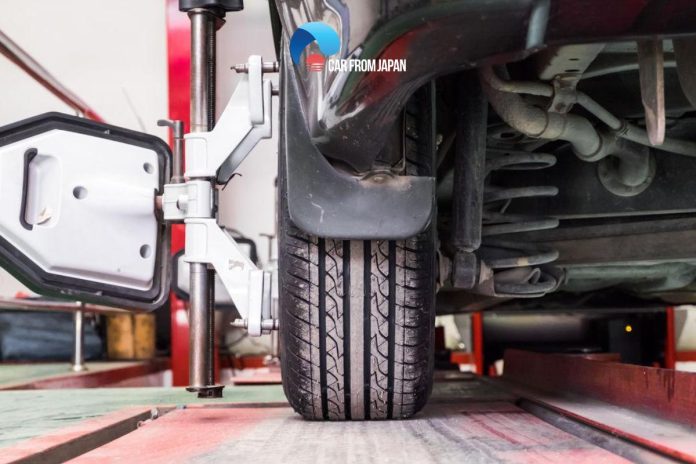
Replacing all the tires in an all-wheel-drive (AWD) vehicle when it is time to change one or two worn out tires is a common practice.
Is it just an AWD tire replacement myth or there is some truth in it? Are there any specific all wheel drive tire replacement rules?
Contents
- What Are The Rules For All Wheel Drive Tire Replacement?
- The AWD Tire Replacement Myth, Or Truth?
- Can You Replace Just 2 Tires On An All Wheel Drive Car?
- FAQs on AWD Tire Replacement
- How small of a tread difference can actually damage an AWD system?
- Can I replace just two tires if they’re on the same axle?
- What is tire shaving, and why do some shops recommend it for AWD cars?
- Why are AWD systems more sensitive than FWD or RWD when it comes to tire replacement?
- Do all AWD systems have the same tolerance for tire differences?
- Can rotating tires regularly help avoid needing to replace all four at once?
- What’s more expensive: replacing four tires or repairing AWD system damage?
What Are The Rules For All Wheel Drive Tire Replacement?
The rear-wheel and front-wheel-drive cars don’t need the replacement of all four tires at once. But, an AWD vehicle needs balanced traction at all four corners. Mismatched tires on AWD may lead to the damage of several components.
The tires on the front axle in AWD often wear off faster than the rear tires. It could happen due to several reasons – not rotating the tires, aggressive driving, driving with under-inflated tires, and misalignment of the tires or wheels.
The standard replacement rule is to change all of them when the front ones wear out. With time, the tread amount decreases and the circumference becomes smaller.
You should not drive with mismatched tires because the worn out tires rotate faster than the good ones, which may cause serious mechanical damage.
You should always check the owner’s manual to get the guidelines for replacing the tires.
SEE MORE: The Secrets of Fixing Tire Sidewall
The AWD Tire Replacement Myth, Or Truth?
So, it seems that the AWD tire replacement myth is not a myth at all. The vehicles do not all of their tires to be replaced at the same time.
Some people may think of keeping the tires that still have some tread life on them because changing all the four tires is expensive. But, saving some money can lead to more expensive repairs given the mechanical damage caused by the worn out tires.
In an all-wheel-drive system, the central computer ensures that each wheel gets the right amount of torque. It reduces slippage and maximizes the wheel control.
If any of the tires have less tread amount or smaller circumference than the others, the computer will take incorrect readings and send wrong information to other components. Driving with mismatched tires for a long time can burn out the drivetrain.
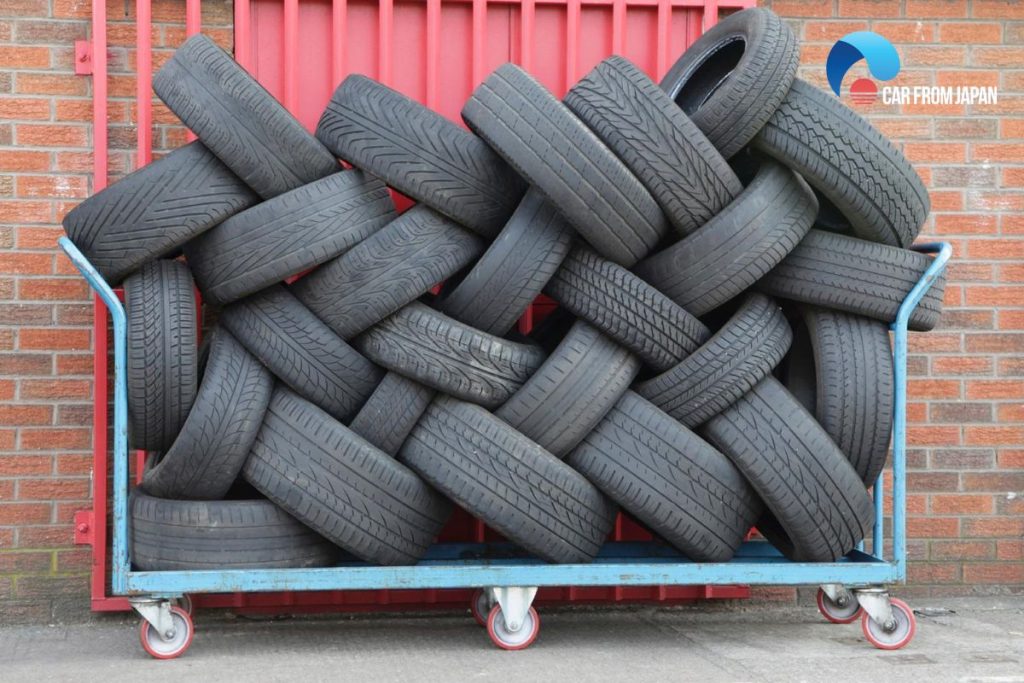
To ensure the best health of your car, all the tires should be of the same size and have the same specs like speed rating and load index.
Can You Replace Just 2 Tires On An All Wheel Drive Car?
Well, the safest option is to replace all four tires but replacing 2 tires on AWD can also be an option. you can do it when the tires only have several thousand miles on them and the ones on the front axle need replacement.
Another way to save money is to replace the damaged one with a new tire and shave it to match the others.
There are some services that shave the tread depth of a tire to match it to the others for a small fee. However, shaving a tire will void its tread-wear warranty.
FAQs on AWD Tire Replacement
How small of a tread difference can actually damage an AWD system?
As little as 2/32” to 3/32” difference can be enough to cause drivetrain strain in sensitive AWD systems like Subaru’s Symmetrical AWD.
Can I replace just two tires if they’re on the same axle?
Sometimes. But only if the new tires closely match the tread depth of the remaining ones. Otherwise, it can still create rotational differences that harm the system.
What is tire shaving, and why do some shops recommend it for AWD cars?
Tire shaving trims a new tire’s tread down to match the worn ones. It’s a lesser-known but effective way to avoid replacing all four tires.
Why are AWD systems more sensitive than FWD or RWD when it comes to tire replacement?
Because AWD constantly distributes power to all wheels. Uneven tire sizes make the system think wheels are slipping, causing constant compensation and internal wear.
Do all AWD systems have the same tolerance for tire differences?
No. Some systems (like part-time AWD or on-demand AWD) are more forgiving, while full-time AWD systems are typically more sensitive.
Can rotating tires regularly help avoid needing to replace all four at once?
Yes. Regular rotation ensures even wear across all tires, reducing the chance of uneven tread depth when one tire needs replacement.
What’s more expensive: replacing four tires or repairing AWD system damage?
Almost always the latter. AWD repairs (like replacing a differential or transfer case) can cost thousands, far more than a full set of tires.
So now you understand more about the AWD tire replacement myth. For more insightful Car knowledge, follow Car From Japan today!